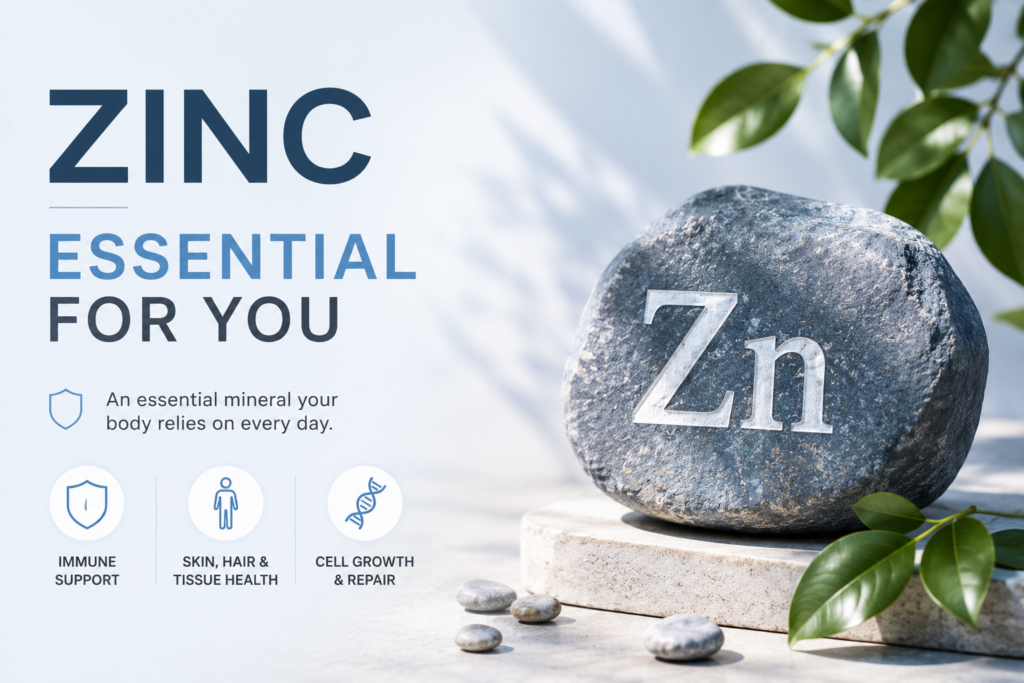
Zinc may be a trace mineral, but its influence reaches almost every part of the body.
Your body needs zinc for the activity of hundreds of enzymes and for processes involving:
- Immune function
- Wound healing
- DNA synthesis
- Protein synthesis
- Cell division
- Growth and development
- Skin health
- Reproductive function
- Normal taste and smell
Unlike some nutrients, the body doesn’t maintain a large, readily accessible storage reserve of zinc.
That means regular dietary intake is important for maintaining adequate zinc status.
But zinc deficiency isn’t always simply a matter of eating too little zinc.
Poor absorption, digestive disorders, increased requirements, dietary patterns, and other factors can all influence how much zinc is ultimately available to your body.
The important question is therefore not simply: “How much zinc am I eating?”
It’s: “Is my body getting and utilizing the zinc it actually needs?”
Why Does Your Body Need Zinc?
Zinc participates in an extraordinary number of biological processes.
It acts as a structural component or cofactor for numerous proteins and enzymes, helping cells carry out normal chemical reactions and regulate gene expression.
Immune Function
Your immune system relies on zinc for the development and normal function of multiple types of immune cells. Zinc is involved in both innate and adaptive immunity, the two major branches of the immune system.
Significant deficiency can impair normal immune responses and increase susceptibility to infections.
But this doesn’t mean taking very large amounts of zinc will continually make your immune system “stronger.” Immune function requires an appropriate nutritional balance—not megadoses of one mineral.
Wound Healing & Skin
Zinc participates in:
- Cell division
- Protein synthesis
- Collagen-related processes
- Immune function
- Tissue repair
All of these processes are important during wound healing.
Because skin cells continually renew themselves, zinc is also important for maintaining normal skin integrity.
Significant zinc deficiency can contribute to skin abnormalities and impaired wound healing.
Taste & Smell
One of zinc’s more unusual relationships involves your senses of taste and smell.
Zinc is required for the normal function of these sensory systems.
Deficiency can sometimes contribute to reduced or altered taste and smell.
However, changes in taste or smell have many other possible causes, including infections, medications, nasal conditions, neurological problems, and aging.
They shouldn’t automatically be interpreted as a zinc deficiency.
Growth & Development
Zinc is essential for DNA synthesis, protein production, and cell division.
These functions make adequate zinc especially important during periods of rapid growth, including:
- Pregnancy
- Infancy
- Childhood
- Adolescence
Severe deficiency during growth can interfere with normal development.
Reproductive Health
Zinc plays a role in reproductive biology in both males and females. In males, zinc is involved in normal testicular and sperm function.
Adequate zinc is also important during pregnancy because of its role in cell division and fetal growth.
Again, this doesn’t mean zinc supplements automatically improve fertility. Reproductive problems can have many different causes.
What Can Zinc Deficiency Look Like?
Zinc deficiency doesn’t always produce one obvious symptom.
Depending on its severity and duration, inadequate zinc can be associated with:
- Reduced appetite
- Impaired wound healing
- Hair loss
- Skin changes
- Changes in taste
- Changes in smell
- Increased susceptibility to infections
- Growth problems in children
Severe deficiency can produce much more pronounced effects.
The problem is that almost every symptom on this list can also occur for reasons completely unrelated to zinc.
For example, hair loss can be influenced by factors such as iron status, thyroid function, hormones, illness, genetics, protein intake, or other nutrients.
Poor wound healing can involve diabetes, circulation, infection, protein deficiency, or other medical problems.
Frequent infections can have numerous explanations. Symptoms give you clues.
They don’t automatically give you the diagnosis.
Why Would Your Zinc Become Low?
Several pathways can lead to inadequate zinc status.
1. Not Eating Enough Zinc
Dietary intake is the obvious place to start.
Some of the richest zinc sources are animal foods, particularly:
- Oysters
- Beef
- Crab
- Other shellfish
- Pork
- Chicken
- Turkey
- Dairy products
- Eggs
Plant foods can provide zinc as well.
Sources include:
- Beans
- Lentils
- Chickpeas
- Pumpkin seeds
- Cashews
- Nuts
- Whole grains
However, there’s an important difference between simply measuring how much zinc a food contains and understanding how much your body can absorb.
2. Phytates & Zinc Absorption
Plant foods such as whole grains, legumes, nuts, and seeds contain compounds called phytates.
Phytates can bind minerals, including zinc, and reduce their absorption in the digestive tract.
This doesn’t mean these foods are unhealthy.
They’re highly nutritious foods that can absolutely be part of a healthy diet.
But people who rely heavily on plant-based zinc sources may sometimes need greater total zinc intake because its bioavailability can be lower.
Food preparation techniques such as soaking, sprouting, fermenting, and leavening can reduce phytate levels in certain foods and potentially improve mineral availability.
3. Digestive & Absorption Problems
You can eat zinc without necessarily absorbing enough of it.
Certain gastrointestinal conditions can interfere with normal nutrient absorption.
Examples can include:
- Crohn’s disease
- Celiac disease
- Chronic diarrhea
- Certain gastrointestinal surgeries
- Other malabsorption disorders
This becomes especially important when someone has multiple nutrient deficiencies at the same time.
Instead of treating each deficiency independently, it may be worth investigating whether an underlying digestive or absorption problem connects them.
4. Increased Requirements
Zinc requirements increase during certain stages of life.
Pregnancy and breastfeeding are particularly important examples because zinc is required for rapid cell division and growth.
Children and adolescents also require adequate zinc to support normal development.
5. Excessive Alcohol Consumption
Chronic excessive alcohol consumption can increase the risk of inadequate zinc status.
It can contribute through several mechanisms, including poorer dietary intake, impaired absorption, and increased urinary zinc losses.
Multiple nutritional deficiencies may therefore occur together.
Zinc And Copper: An Important Relationship
One of the most important things to understand before taking zinc supplements is its relationship with copper.
Zinc and copper can compete during intestinal absorption.
Taking high doses of zinc for prolonged periods can interfere with copper absorption enough to produce copper deficiency.
Copper deficiency can potentially contribute to:
- Anemia
- Low white blood cell counts
- Neurological problems
This provides another excellent example of why nutrition isn’t about maximizing individual nutrients.
You can correct one perceived imbalance and accidentally create another.
Zinc and copper need to be balanced.
Does Zinc Help Your Immune System?
Yes—adequate zinc is necessary for normal immune function.
But there’s a major difference between correcting zinc deficiency and taking excessive zinc because more seems better.
If you’re deficient, restoring adequate zinc can help normalize zinc-dependent biological functions.
If your zinc status is already adequate, continuously increasing the amount doesn’t necessarily provide additional benefit.
The immune system also depends on:
- Protein
- Vitamin A
- Vitamin C
- Vitamin D
- Selenium
- Iron
- Copper
- Energy intake
- Sleep
- Numerous other factors
There isn’t one single “immune nutrient.”
Zinc, Skin & Acne
Zinc is often discussed in relation to acne because it participates in immune function, inflammation regulation, skin integrity, and wound healing.
Some research has investigated zinc as part of acne management.
However, acne is a multifactorial condition.
Factors can include:
- Sebum production
- Hormonal activity
- Follicular plugging
- Bacteria
- Inflammation
- Genetics
- Certain medications and products
So acne shouldn’t automatically be interpreted as evidence of zinc deficiency.
When skin problems occur alongside other signs of nutritional imbalance, evaluating the broader nutritional picture can make more sense than simply adding zinc.
What Are The Best Foods For Zinc?
For most people, food is an excellent place to start.
Oysters & Shellfish
Oysters are among the most concentrated natural sources of zinc.
Other shellfish can also provide meaningful amounts.
Meat
Beef, pork, poultry, and other meats provide zinc in a relatively bioavailable form.
Dairy & Eggs
Cheese, milk, yogurt, and eggs can contribute to overall zinc intake.
Legumes
Beans, lentils, and chickpeas provide plant-based zinc along with protein, fiber, and other minerals.
Nuts & Seeds
Pumpkin seeds, cashews, and other nuts and seeds can contribute zinc as part of a varied diet.
Rather than relying on one “superfood,” aim for a variety of nutrient-dense foods.
Should You Take A Zinc Supplement?
Zinc supplementation may be appropriate when inadequate intake or deficiency has been identified.
But dosage matters.
Taking excessive zinc can cause immediate side effects such as:
- Nausea
- Vomiting
- Abdominal discomfort
- Headaches
- Loss of appetite
Long-term excessive zinc can also interfere with copper absorption.
This is particularly important because someone may take zinc for months, believing they’re supporting their immune system, while unintentionally disrupting another essential mineral.
The goal isn’t maximum zinc.
The goal is adequate zinc in the context of overall nutritional balance.
How Do You Know If Your Zinc Is Low?
Symptoms alone cannot reliably determine whether your body needs more zinc.
This is where looking at the individual rather than simply looking at a symptom becomes important.
At Systemic Body, we use energetic testing as part of our personalized approach to assessing potential nutritional imbalances.
Our energetic testing can be used to explore nutrients that may warrant further attention, including:
- Zinc
- Copper
- Magnesium
- Calcium
- Selenium
- Vitamins
- Amino acids
- Other nutritional factors
Rather than seeing a symptom such as hair loss, poor skin, fatigue, or frequent infections and immediately assuming “take zinc,” our goal is to look at the broader nutritional picture.
We can explore questions such as:
Which nutrients may need attention?
Are several nutritional imbalances appearing together?
Could digestion or absorption be contributing?
Could diet, lifestyle, toxicity, or other systemic factors be involved?
The purpose of our approach is to help identify areas that may deserve attention and use that information as part of a broader, individualized nutritional strategy.
Don’t Treat Zinc As An Isolated Nutrient
Your body doesn’t see zinc, copper, selenium, magnesium, vitamins, proteins, and fats as separate nutritional categories.
They interact constantly.
Zinc provides an excellent example.
You need zinc for normal immune function.
But excessive zinc can interfere with copper.
Your skin needs zinc.
But it also depends on protein, essential fatty acids, vitamin A, vitamin C, and many other nutrients.
Your body needs zinc for growth.
But growth also requires sufficient calories, protein, vitamins, minerals, hormones, and healthy physiological function.
So when zinc appears to be low, don’t stop at: “Which supplement should I take?”
Go one step further: “Why might my body not be getting or maintaining what it needs?”
At Systemic Body, our goal is to identify potential nutritional and systemic imbalances and understand the root causes behind them, rather than simply adding random supplements based on symptoms.
A personalized approach allows us to look at nutrition, digestion, absorption, lifestyle, toxicity, and other factors together.
Healthfully,
Systemic Body
Note: I write every post; all this info comes from 10 years of daily testing for my own body.