The True Definition
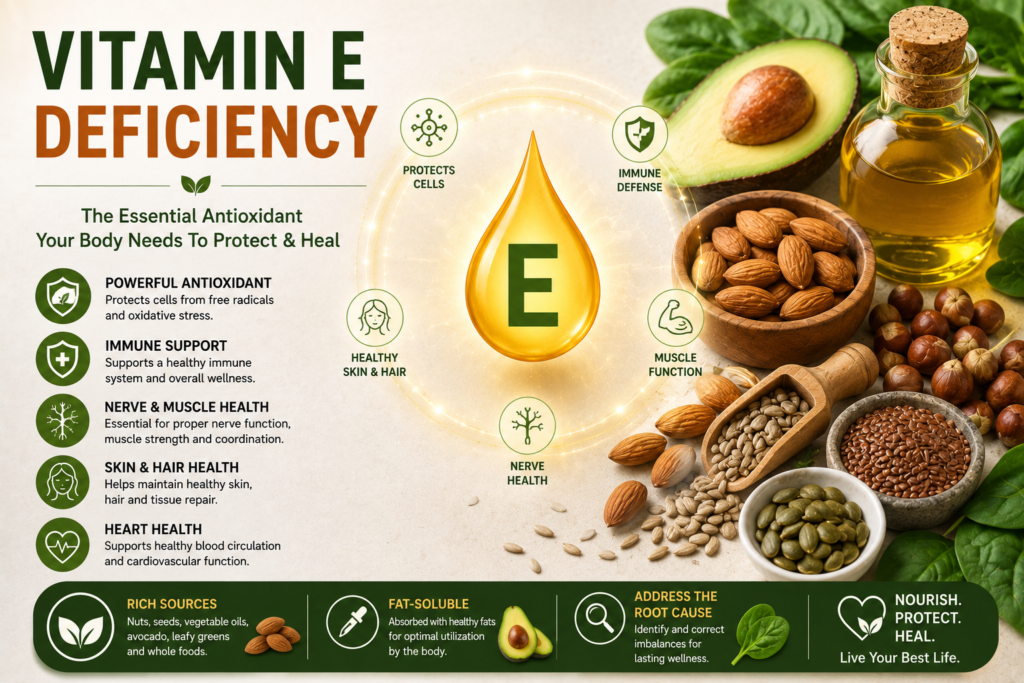
Vitamin E deficiency is a state in which the body does not have enough vitamin E to properly support antioxidant protection, immune function, nerve health, muscle function, and normal cellular activity.
Vitamin E is a fat-soluble vitamin, meaning it is absorbed together with dietary fat and can be stored in the body’s tissues.
The term vitamin E actually describes a family of related compounds called tocopherols and tocotrienols. Alpha-tocopherol is the form the human body preferentially maintains and is the form generally used when determining vitamin E requirements.
One of vitamin E’s most important functions is acting as an antioxidant.
Normal metabolism produces molecules known as free radicals. Vitamin E helps protect cell membranes from oxidative damage caused by these molecules.
Because vitamin E is fat-soluble, deficiency is often not simply a question of how much vitamin E someone eats. The body’s ability to digest and absorb dietary fats is extremely important.
Primary Health Effects
- Nerve Health: Severe vitamin E deficiency can damage peripheral nerves, potentially causing numbness, tingling, weakness, or other neurological symptoms.
- Muscle Function: Vitamin E is important for normal muscle function. A significant deficiency may contribute to muscle weakness.
- Coordination & Balance: Prolonged severe deficiency can affect neurological function and may lead to difficulty with coordination and walking.
- Immune Function: Vitamin E supports normal immune function and helps protect immune cells from oxidative damage.
- Cellular Protection: As an antioxidant, vitamin E helps protect cell membranes against oxidative stress.
- Vision: Severe deficiency can affect structures involved in normal vision.
What Can Cause Vitamin E Deficiency?
True vitamin E deficiency is relatively uncommon in otherwise healthy people.
When it occurs, it is frequently related to an underlying problem affecting fat absorption or vitamin E metabolism rather than simply inadequate dietary intake.
1. Poor Fat Absorption
Because vitamin E is fat-soluble, your digestive system must properly digest and absorb fat before vitamin E can be effectively absorbed.
Conditions that interfere with fat absorption can therefore increase the risk of deficiency.
These can include:
- Crohn’s disease
- Celiac disease
- Cystic fibrosis
- Certain pancreatic disorders
- Cholestatic liver or bile disorders
- Short bowel syndrome
- Other chronic malabsorption conditions
When fat absorption is impaired, other fat-soluble vitamins such as vitamins A, D, and K can potentially be affected as well.
2. Inadequate Vitamin E Intake
Although severe deficiency from diet alone is uncommon, consistently consuming a diet lacking vitamin E-rich foods can contribute to inadequate intake.
Good sources of vitamin E include:
- Almonds
- Sunflower seeds
- Hazelnuts
- Peanuts
- Avocados
- Spinach
- Vegetable oils
- Wheat germ
- Certain fish
Nuts, seeds, and plant oils are among the richest dietary sources.
3. Genetic Disorders
Rare genetic disorders can interfere with the body’s ability to transport or utilize vitamin E.
One example is ataxia with vitamin E deficiency (AVED), a rare inherited condition that affects the body’s ability to maintain normal vitamin E levels.
Another is abetalipoproteinemia, which interferes with normal fat and fat-soluble vitamin absorption and transport. These conditions can cause severe vitamin E deficiency and neurological problems if not properly treated.
4. Digestive Problems
Sometimes the amount of vitamin E in the diet isn’t the main issue.
If digestion or absorption is compromised, the body may not be able to obtain the nutrients contained in food effectively.
This is why someone with a suspected vitamin E deficiency should ask:
Why isn’t my body absorbing the vitamin E I’m consuming?
Looking at digestive function and fat absorption can therefore be an important part of identifying the underlying cause.
5. Premature Birth
Premature infants may have lower vitamin E stores because much of the transfer of vitamin E from mother to baby occurs later in pregnancy.
Very premature infants may therefore have an increased risk of deficiency and require medical monitoring.
How To Treat Vitamin E Deficiency
The first step is determining why the deficiency exists.
If dietary intake is inadequate, increasing vitamin E-rich whole foods can be beneficial.
Because vitamin E is fat-soluble, consuming it as part of a meal containing dietary fat helps support absorption.
However, if someone already consumes plenty of vitamin E and is still deficient, simply eating more vitamin E may not address the underlying problem.
You need to investigate whether the body is properly digesting and absorbing fats.
If an underlying digestive condition is interfering with absorption, correcting or managing that condition becomes an important part of addressing the deficiency.
Vitamin E Supplementation
Vitamin E supplements may sometimes be recommended when a true deficiency has been identified, particularly when malabsorption or certain genetic conditions are involved.
However, more vitamin E is not automatically better. We will evaluate you and let you know.
High-dose vitamin E supplementation can increase bleeding risk, particularly in people taking certain anticoagulant or antiplatelet medications.
The appropriate amount, therefore, depends on the person’s nutritional status, underlying cause, medications, diet, and medical history.
Conclusion – Get Started NOW
If you believe you have a vitamin E deficiency, don’t assume that simply taking a vitamin E supplement will solve the problem.
True vitamin E deficiency can sometimes indicate an underlying issue with digestion, fat absorption, or nutrient metabolism. Book a FREE appointment below and we will let you know.
Symptoms such as muscle weakness, numbness, tingling, coordination problems, or vision changes can also have many different causes, so symptoms alone cannot diagnose vitamin E deficiency.
At Systemic Body, we focus on identifying the underlying nutritional and systemic imbalances rather than simply adding random supplements.
The goal is to determine what your body needs, understand why the imbalance developed, and address the root cause whenever possible. The sooner you identify the real cause of your symptoms, the sooner you can start addressing it appropriately.
Healthfully,
Systemic Body
Note: I write every post; all this info comes from 10 years of daily testing for my own body.