The True Definition
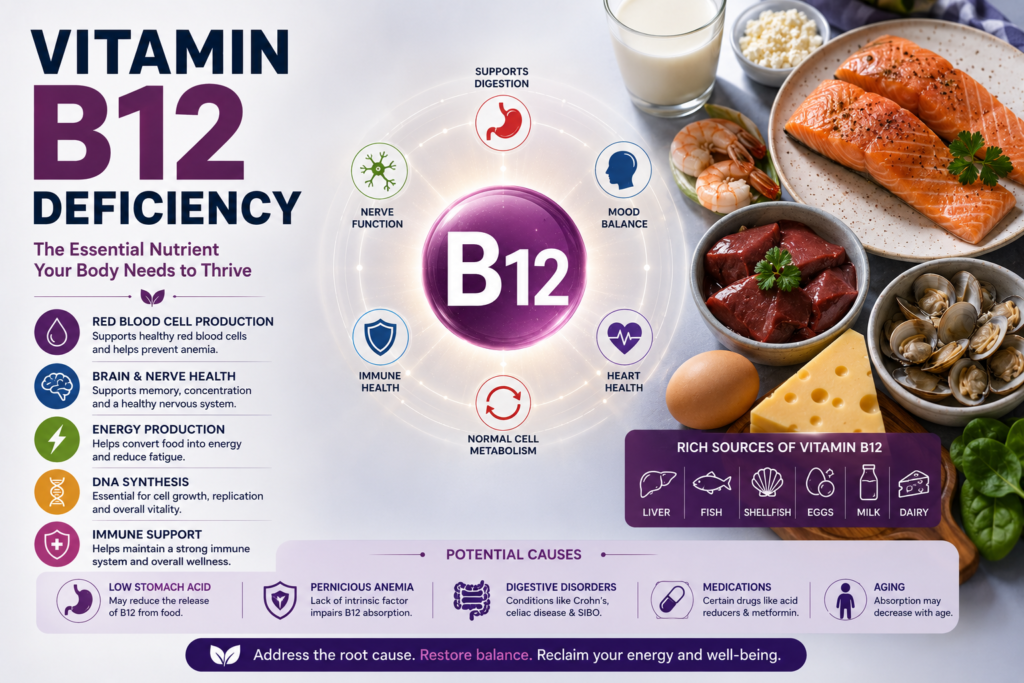
Vitamin B12 deficiency is a state in which the body does not have enough vitamin B12 to properly support red blood cell production, nervous system function, DNA synthesis, and normal cellular metabolism.
Vitamin B12, also known as cobalamin, is a water-soluble vitamin. Unlike most water-soluble vitamins, however, the body can store relatively large amounts of B12, primarily in the liver.
Because of these stores, a deficiency may develop gradually, and symptoms can sometimes take years to become noticeable.
Vitamin B12 is naturally found primarily in animal-derived foods, including:
- Beef
- Liver
- Fish
- Shellfish
- Eggs
- Milk
- Cheese and other dairy products
Certain fortified foods and supplements also contain vitamin B12, but we don’t recommend those.
Getting enough B12 from food is only one part of the equation. The body must also be able to release B12 from food, bind it to intrinsic factor, absorb it through the small intestine, transport it, and ultimately utilize it.
This is why someone can potentially consume adequate amounts of vitamin B12 and still become deficient.
Primary Health Effects
- Fatigue & Weakness: Vitamin B12 is necessary for healthy red blood cell production. Deficiency can contribute to megaloblastic anemia, which may cause fatigue, weakness, and reduced exercise tolerance.
- Brain Fog & Concentration Problems: Low B12 can affect neurological function and may contribute to difficulty concentrating, memory problems, or mental fog.
- Numbness & Tingling: Vitamin B12 is essential for maintaining healthy nerves. Deficiency can cause numbness, tingling, burning sensations, or other abnormal sensations, particularly in the hands and feet.
- Balance & Coordination Problems: More advanced neurological involvement can affect walking, balance, and coordination.
- Mood Changes: Vitamin B12 deficiency can sometimes be associated with mood or cognitive changes.
- Pale Skin: Anemia associated with B12 deficiency can contribute to pale skin and other symptoms related to reduced healthy red blood cell production.
- Sore or Smooth Tongue: Some people with B12 deficiency develop glossitis, causing the tongue to become inflamed, painful, or unusually smooth.
What Can Cause Vitamin B12 Deficiency?
Vitamin B12 deficiency is not always caused by simply eating too little B12.
In many cases, the real problem is absorption. For vitamin B12 from food to be properly absorbed, several digestive processes must work correctly.
Stomach acid and digestive enzymes help release B12 from food. B12 then binds to intrinsic factor, a protein produced by cells in the stomach.
This complex eventually travels to the end of the small intestine, where B12 can be absorbed. A problem anywhere along this pathway can interfere with vitamin B12 absorption.
1. Inadequate Vitamin B12 Intake
Because natural vitamin B12 is found primarily in animal-derived foods, people who consume very little or no animal products may be at greater risk of deficiency unless they obtain B12 through fortified foods or supplementation.
Some of the richest natural sources include:
- Beef liver
- Clams
- Sardines
- Salmon
- Tuna
- Beef
- Eggs
- Milk
- Yogurt
- Cheese
People following vegan diets generally need a reliable source of supplemental or fortified vitamin B12 because unfortified plant foods are not dependable sources.
2. Low Stomach Acid
Vitamin B12 in food is attached to proteins. Stomach acid helps release B12 from those proteins so that it can eventually be absorbed.
When stomach acid production is reduced, the body may have more difficulty extracting vitamin B12 from food. Low stomach acid becomes more common with age and can also occur for other reasons.
This means someone could theoretically consume plenty of B12-rich foods while still having difficulty accessing the vitamin contained within them.
3. Pernicious Anemia & Intrinsic Factor Problems
One of the most important causes of vitamin B12 deficiency is pernicious anemia.
Intrinsic factor is produced in the stomach and is necessary for normal absorption of dietary vitamin B12.
In pernicious anemia, an autoimmune process interferes with intrinsic factor production or the stomach cells responsible for producing it. Without sufficient intrinsic factors, vitamin B12 absorption can become severely impaired.
In these situations, simply eating more B12-rich food may not solve the underlying problem.
4. Digestive & Intestinal Problems
Vitamin B12 is absorbed primarily in the final portion of the small intestine, known as the terminal ileum.
Conditions affecting the digestive system can therefore interfere with absorption.
These may include:
- Crohn’s disease
- Celiac disease
- Certain gastrointestinal infections
- Small intestinal bacterial overgrowth
- Chronic digestive disorders
- Conditions affecting the terminal ileum
People who have undergone certain stomach or intestinal surgeries may also have difficulty absorbing vitamin B12.
5. Certain Medications
Some medications can interfere with vitamin B12 absorption when used long-term.
Examples include certain acid-reducing medications because reducing stomach acid can interfere with the body’s ability to release B12 from food.
Metformin, commonly used for diabetes, has also been associated with reduced vitamin B12 levels in some people.
This doesn’t mean these medications should simply be stopped. Instead, people taking them long term may need their vitamin B12 status monitored when clinically appropriate.
6. Age
Vitamin B12 deficiency becomes more common as people get older. One reason is that stomach acid production may decline with age.
Changes in digestive function can make it increasingly difficult to extract and absorb B12 from food. Older adults can therefore develop a deficiency even when their diet contains vitamin B12.
7. Increased Nutritional Requirements
Pregnancy and breastfeeding increase nutritional demands, including the need for vitamin B12.
Adequate B12 is particularly important during pregnancy because it plays an essential role in DNA synthesis, red blood cell production, and normal neurological development.
People who are pregnant and consume little or no animal food need to pay particular attention to obtaining reliable vitamin B12.
How To Treat Vitamin B12 Deficiency
The first step is determining why your vitamin B12 is low. We will tell you that once you book an appointment with us.
If the problem is simply inadequate dietary intake, increasing vitamin B12-rich foods may help.
However, if you’re already consuming plenty of vitamin B12 and still have a deficiency, simply eating more B12 may not address the real problem.
You should ask:
Why isn’t my body absorbing or utilizing the vitamin B12 I’m already consuming?
Possible underlying factors can include:
- Poor digestive function
- Reduced stomach acid
- Intrinsic factor problems
- Pernicious anemia
- Intestinal disorders
- Certain medications
- Previous gastrointestinal surgery
- Other absorption problems
Correcting the underlying issue is an important part of properly addressing the deficiency.
Vitamin B12 Supplementation
Depending on the cause and severity of deficiency, vitamin B12 may be given through:
- Oral supplements
- Sublingual products
- High-dose oral B12
- Vitamin B12 injections
The appropriate approach depends heavily on why the deficiency exists.
Someone whose deficiency comes from inadequate dietary intake is very different from someone who has severe malabsorption or pernicious anemia.
In cases involving significant neurological symptoms or severe deficiency, medical evaluation and prompt treatment are particularly important because prolonged B12 deficiency can cause neurological damage that may not always be completely reversible.
Testing Vitamin B12
We will test your levels with energetic testing. It’s simple and fast, so don’t worry about it and book your spot below.
The goal shouldn’t simply be to look at one isolated number. The person’s symptoms, diet, digestive health, medications, medical history, and laboratory findings should all be considered together.
Conclusion – Get Started NOW
If you believe you have a vitamin B12 deficiency, don’t assume the solution is simply taking more B12.
The first question should be: Why is the deficiency happening?
For some people, the answer may be inadequate dietary intake. For others, the problem may involve stomach acid, intrinsic factor, digestive health, intestinal absorption, medications, or another underlying issue.
Symptoms such as fatigue, weakness, brain fog, numbness, tingling, or poor concentration can also have many different causes, so symptoms alone cannot diagnose vitamin B12 deficiency. We will test you.
At Systemic Body, we focus on identifying the underlying nutritional and systemic imbalances rather than simply adding random supplements. The sooner you identify the real cause of your symptoms, the sooner you can start addressing it appropriately.
Healthfully,
Systemic Body
Note: I write every post; all this info comes from 10 years of daily testing for my own body.