The True Definition
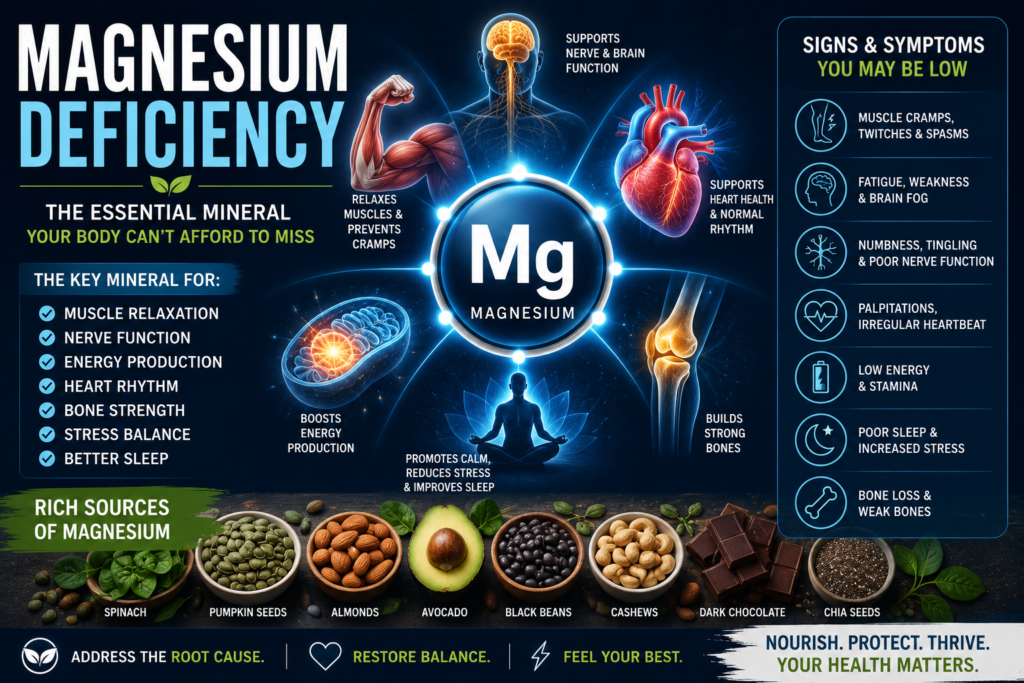
Magnesium deficiency is a state in which the body does not have enough magnesium to properly support muscle function, nerve signaling, energy production, bone health, heart rhythm, and hundreds of biochemical reactions throughout the body.
Magnesium is an essential mineral and electrolyte. Your body cannot manufacture it, which means you must obtain magnesium through food or, when appropriate, supplementation.
A large portion of the body’s magnesium is stored in bones and soft tissues, while only a small amount circulates in the blood.
This is important because magnesium’s role extends far beyond simply preventing muscle cramps.
Magnesium participates in more than 300 enzyme systems involved in processes such as:
- Energy production
- Protein synthesis
- Muscle contraction and relaxation
- Normal nerve function
- Blood glucose regulation
- Blood pressure regulation
- DNA and RNA synthesis
- Bone development
- Normal heart rhythm
When magnesium intake or absorption becomes inadequate or magnesium losses become excessive, these processes can potentially be affected.
Primary Health Effects
- Muscle Cramps & Spasms: Magnesium contributes to normal muscle contraction and relaxation. Deficiency can cause cramps, spasms, tremors, or muscle weakness.
- Fatigue & Weakness: Magnesium is involved in cellular energy production, and a significant deficiency may contribute to fatigue and weakness.
- Nerve Function: Low magnesium can affect normal nerve signaling and may contribute to numbness, tingling, tremors, or abnormal muscle activity.
- Heart Rhythm: Magnesium is an important electrolyte involved in the normal electrical activity of the heart. Severe deficiency can contribute to abnormal heart rhythms.
- Bone Health: A significant amount of the body’s magnesium is stored in bone, and magnesium contributes to normal bone structure and mineral metabolism.
- Electrolyte Balance: Magnesium interacts closely with other electrolytes, particularly potassium and calcium. Severe magnesium deficiency can therefore contribute to abnormalities in these minerals as well.
What Can Cause Magnesium Deficiency?
Magnesium deficiency isn’t always caused by simply eating too little magnesium.
A person can potentially consume magnesium while still experiencing problems because of poor absorption, increased losses, certain medications, digestive disorders, or increased nutritional requirements.
This is why it’s important to understand the underlying cause instead of automatically assuming that taking more magnesium is the complete solution.
Book an appointment below, and we will help you.
1. Inadequate Magnesium Intake
A diet containing very few magnesium-rich whole foods can contribute to inadequate intake.
Good dietary sources of magnesium include:
- Pumpkin seeds
- Chia seeds
- Almonds
- Cashews
- Spinach
- Beans
- Avocados
- Whole grains
- Dark chocolate
- Certain fish
Diets dominated by highly refined foods may contain less magnesium than diets rich in whole foods, nuts, seeds, legumes, and vegetables.
2. Digestive & Absorption Problems
Your diet only matters if your digestive system can properly absorb the nutrients you’re consuming.
Chronic digestive conditions can interfere with magnesium absorption or increase nutrient losses.
These may include:
- Crohn’s disease
- Celiac disease
- Chronic diarrhea
- Other intestinal disorders
- Certain gastrointestinal surgeries
If you’re eating a nutrient-rich diet but repeatedly developing deficiencies, it can be important to investigate digestion and absorption rather than simply adding more supplements.
3. Excessive Magnesium Losses
Magnesium can be lost through the gastrointestinal tract and kidneys. Persistent diarrhea or vomiting, for example, can contribute to significant electrolyte losses.
Certain medical conditions can also cause the kidneys to excrete excessive amounts of magnesium. In these situations, the problem may not be insufficient intake.
The body may simply be losing magnesium faster than it can replace it.
4. Certain Medications
Some medications can affect magnesium levels, particularly when used over longer periods.
Examples can include:
- Certain diuretics
- Proton pump inhibitors (PPIs)
- Some antibiotics
- Certain medications used in cancer treatment
This does not mean these medications should be stopped without medical guidance. Instead, people using medications known to affect magnesium may sometimes need their magnesium status evaluated.
5. Excessive Alcohol Consumption
Chronic excessive alcohol consumption can increase the risk of magnesium deficiency through several mechanisms.
It can contribute to:
- Poor dietary intake
- Digestive problems
- Increased urinary magnesium loss
- Vomiting or diarrhea
- Other nutritional deficiencies
This is one reason multiple nutrient deficiencies can sometimes occur together.
6. Certain Health Conditions
Some health conditions can increase magnesium losses or alter magnesium metabolism.
For example, poorly controlled diabetes can increase urinary magnesium losses in some people.
Kidney function is also particularly important because the kidneys help regulate how much magnesium the body retains or eliminates.
7. Increased Nutritional Requirements
Nutrient requirements can vary depending on age, diet, pregnancy, breastfeeding, physical activity, health status, and other factors.
However, symptoms should not automatically be interpreted as evidence that the body simply “needs more magnesium.”
The first goal should always be understanding whether a true deficiency exists and why it developed.
How To Treat Magnesium Deficiency
The first step is identifying the underlying cause.
Ask: Am I consuming enough magnesium?
And if the answer is yes:
Why isn’t my body maintaining adequate magnesium levels?
If dietary intake is inadequate, increasing magnesium-rich foods is an excellent place to start.
Some of the richest whole-food sources include:
- Pumpkin seeds
- Chia seeds
- Almonds
- Cashews
- Spinach
- Black beans
- Avocados
- Whole grains
- Dark chocolate
Eating a varied whole-food diet also provides other minerals and nutrients that work together with magnesium.
However, if poor absorption, excessive losses, medication effects, or another health condition is responsible, simply increasing dietary magnesium may not completely solve the problem.
The underlying issue also needs to be addressed. We can help with that. Book an appointment below.
Magnesium Supplementation
Magnesium supplements are available in several different forms, including:
- Magnesium glycinate
- Magnesium citrate
- Magnesium chloride
- Magnesium oxide
- Magnesium threonate
Different forms contain different amounts of elemental magnesium and may differ in absorption and gastrointestinal effects.
For example, some forms of magnesium can have a laxative effect, particularly at higher doses.
The appropriate supplement and dosage depend on the person’s needs, diet, symptoms, medications, kidney function, and reason for supplementation.
More magnesium is not necessarily better.
Excessive supplemental magnesium can cause:
- Diarrhea
- Nausea
- Abdominal cramping
Very high magnesium levels can become dangerous, particularly in people with significantly impaired kidney function.
Testing Magnesium
Magnesium status can sometimes be challenging to evaluate because only a small proportion of the body’s total magnesium is present in the blood.
That’s why we test energetically, and we will tell you right away if you have a magnesium deficiency or not.
Book an appointment below NOW!
Conclusion – Get Started NOW
If you believe you have a magnesium deficiency, don’t automatically assume that taking large amounts of magnesium is the solution.
The real question is: Why are your magnesium levels inadequate in the first place?
For some people, the answer may simply be insufficient dietary intake.
For others, the underlying issue may involve poor absorption, digestive problems, excessive losses, medications, or another health condition.
Symptoms such as muscle cramps, fatigue, weakness, tingling, or heart palpitations can also have many different causes, so symptoms alone cannot diagnose magnesium deficiency.
At Systemic Body, we focus on identifying the underlying nutritional and systemic imbalances rather than simply adding random supplements.
The goal is to understand what your body needs, determine why the imbalance developed, and address the underlying cause whenever possible. The sooner you identify the real cause of your symptoms, the sooner you can start addressing it appropriately.
Healthfully,
Systemic Body
Note: I write every post; all this info comes from 10 years of daily testing for my own body.