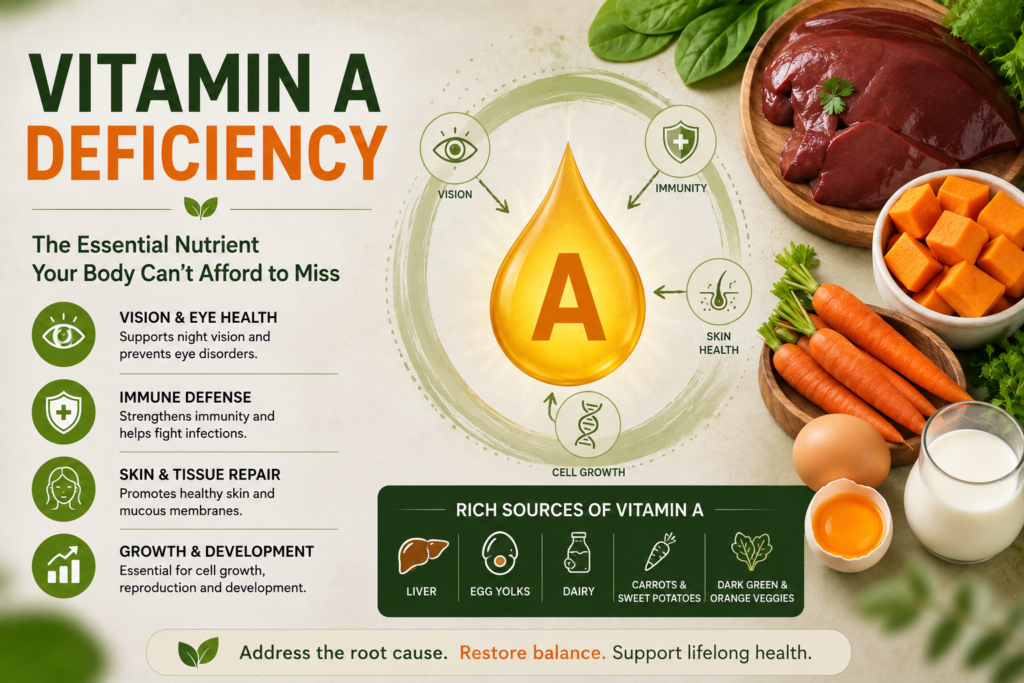
The True Definition
Vitamin A deficiency is a state in which the body does not have enough vitamin A to properly support vision, immune function, skin health, tissue repair, reproduction, and normal cell growth.
Vitamin A is a fat-soluble vitamin, meaning the body absorbs it together with dietary fats and can store it, primarily in the liver.
There are two main dietary forms of vitamin A:
- Preformed Vitamin A (Retinol): Found mainly in animal foods such as liver, eggs, dairy products, and certain fish.
- Provitamin A Carotenoids: Found in plant foods such as carrots, sweet potatoes, pumpkin, spinach, and other colorful vegetables. Beta-carotene is the best-known example and must be converted by the body into active vitamin A.
Because vitamin A plays an important role in many tissues, a significant deficiency can affect several different systems in the body.
Primary Health Effects
- Vision Problems: Vitamin A is essential for normal vision, particularly the ability to see in low-light conditions. Night blindness can be one of the earliest signs of deficiency.
- Eye Health: Severe or prolonged deficiency can cause dryness of the eyes and damage to the cornea. In extreme cases, vitamin A deficiency can contribute to permanent vision loss.
- Immune Function: Vitamin A helps maintain the body’s natural barriers and supports normal immune responses. Deficiency can make it harder for the body to defend itself against infections.
- Skin & Tissue Health: Dry or rough skin and impaired maintenance of epithelial tissues can occur when vitamin A levels are inadequate.
- Growth & Development: Vitamin A is important for normal growth, cellular differentiation, reproduction, and development.
- Wound Healing: Because vitamin A participates in normal cell growth and tissue maintenance, inadequate levels may interfere with normal tissue repair.
What Can Cause Vitamin A Deficiency?
True vitamin A deficiency is generally associated with either not consuming enough vitamin A or having difficulty absorbing, storing, or utilizing fat-soluble nutrients.
People eating a varied diet containing vitamin A-rich foods will generally have a much lower risk of developing a severe deficiency. From all the people that we treated, not many had vitamin A deficiency.
1. Inadequate Vitamin A Intake
The most obvious cause is simply not consuming enough foods containing vitamin A.
Good animal sources include:
- Beef liver
- Chicken liver
- Cod liver
- Egg yolks
- Butter
- Full-fat dairy
- Certain fish
Plant foods can also provide beta-carotene and other carotenoids, including:
- Carrots
- Sweet potatoes
- Pumpkin
- Spinach
- Kale
- Red peppers
- Cantaloupe
However, carotenoids from plants are not already active vitamin A. The body has to convert them into retinol. The efficiency of this conversion can vary significantly between individuals.
2. Poor Fat Absorption
Vitamin A is fat-soluble.
This means that even if you’re eating enough vitamin A, your body still needs to properly digest and absorb dietary fats to utilize it.
Conditions that interfere with fat absorption can therefore increase the risk of vitamin A deficiency.
These can include:
- Celiac disease
- Crohn’s disease
- Ulcerative colitis
- Cystic fibrosis
- Pancreatic insufficiency
- Certain liver or bile disorders
- Chronic digestive problems
- Some gastrointestinal surgeries
If fat isn’t being properly digested or absorbed, vitamin A and other fat-soluble vitamins such as vitamins D, E, and K may also be poorly absorbed.
3. Liver Problems
The liver plays an extremely important role in vitamin A metabolism because a large portion of the body’s vitamin A reserves are stored there. Significant liver dysfunction can interfere with the body’s ability to properly store and metabolize vitamin A.
This means that sometimes the problem isn’t simply how much vitamin A you’re eating. The body’s ability to absorb, store, transport, and use nutrients also matters.
4. Poor Conversion Of Beta-Carotene
Plant foods do not generally contain the same preformed vitamin A found in animal foods. Instead, many contain carotenoids such as beta-carotene.
Your body must convert beta-carotene into active vitamin A. Some people perform this conversion more efficiently than others due to genetics, nutritional status, digestive health, and other physiological factors.
This is one reason why foods containing preformed vitamin A, such as liver and egg yolks, can be valuable sources.
5. Very Low-Fat Diets
Because vitamin A requires dietary fat for proper absorption, extremely low-fat diets may reduce absorption. Eating vitamin A-rich foods together with healthy dietary fats can improve carotenoid and vitamin A absorption.
6. Increased Nutritional Requirements
Certain periods of life increase nutritional demands. Growing children and pregnant or breastfeeding women have greater vitamin A requirements.
However, vitamin A supplementation during pregnancy requires particular caution because excessive amounts of preformed vitamin A can be harmful to a developing baby. More is not always better when it comes to fat-soluble vitamins.
How To Treat Vitamin A Deficiency
The first step is determining why the deficiency exists.
Simply taking a large vitamin A supplement without understanding the underlying problem isn’t necessarily the best approach. If dietary intake is inadequate, we recommend increasing nutrient-dense foods naturally containing vitamin A.
If someone is eating plenty of vitamin A-rich foods and still has signs of deficiency, the next question should be:
Why isn’t the body absorbing or utilizing it properly?
Digestive function, fat absorption, liver function, overall nutrition, and other underlying issues may need to be investigated.
Be Careful With Vitamin A Supplements
Vitamin A is different from many water-soluble vitamins because the body can store significant amounts of it.
Taking excessive amounts of preformed vitamin A (retinol) over time can cause toxicity.
Symptoms of excessive vitamin A intake can include headaches, nausea, dizziness, skin changes, liver problems, and other complications.
This is why blindly taking high-dose vitamin A supplements is not recommended. The goal should be to determine whether you actually have a deficiency and then understand what is causing it.
Conclusion – Get Started NOW
If you believe you have a vitamin A deficiency, the first thing we recommend is looking at your overall nutrition and determining whether your body is actually getting and utilizing the nutrients it needs.
Symptoms such as poor night vision, dry eyes, frequent infections, dry skin, or slow healing can have multiple causes, so symptoms alone don’t prove that vitamin A is the problem.
At Systemic Body, we focus on identifying the underlying nutritional and systemic imbalances rather than simply adding random supplements.
The sooner you identify the real cause of your symptoms, the sooner you can start correcting it.
Healthfully,
Systemic Body
Note: I write every post; all this info comes from 10 years of daily testing for my own body.