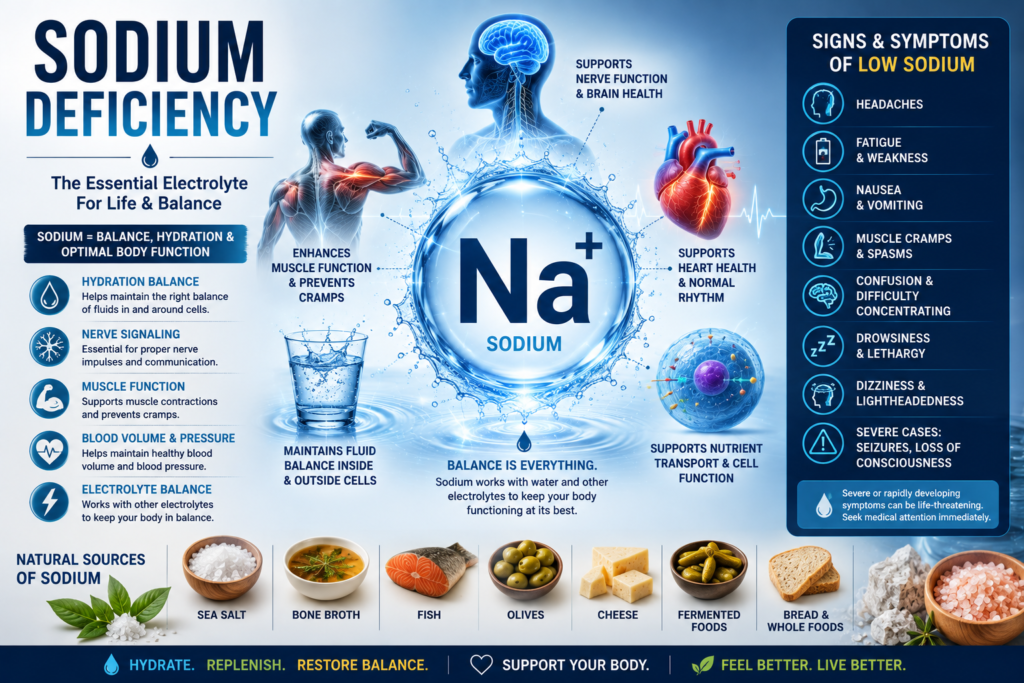
The True Definition
Sodium deficiency generally refers to hyponatremia, a condition in which the concentration of sodium in the blood becomes abnormally low.
Sodium is an essential mineral and one of the body’s major electrolytes. It plays an important role in maintaining fluid balance, nerve signaling, muscle function, and normal blood volume.
Unlike many nutritional deficiencies, however, low blood sodium does not necessarily mean that you simply aren’t eating enough salt.
Hyponatremia frequently occurs because the body contains too much water relative to the amount of sodium present, because sodium has been lost through the kidneys or digestive system, or because an underlying medical condition or medication is disrupting normal fluid and electrolyte regulation.
This distinction is extremely important. Simply consuming more salt is not always the correct treatment for low sodium.
Primary Health Effects
- Fatigue & Weakness: Low sodium can interfere with normal nerve and muscle function and may cause weakness or significant fatigue.
- Headaches: Changes in fluid and electrolyte balance can contribute to headaches.
- Nausea & Vomiting: Hyponatremia can cause gastrointestinal symptoms, including nausea and vomiting.
- Muscle Cramps & Weakness: Sodium is essential for normal electrical signaling and muscle contraction.
- Confusion: More significant hyponatremia can affect brain function and cause confusion, disorientation, or unusual behavior.
- Drowsiness: Low sodium may cause lethargy or unusual sleepiness.
- Seizures: Severe or rapidly developing hyponatremia can cause seizures.
- Loss of Consciousness: Extremely severe cases can cause coma and become life-threatening.
What Can Cause Sodium Deficiency?
Understanding why sodium is low is much more important than simply assuming the body needs more salt.
The kidneys, hormones, water intake, medications, and several organs all participate in regulating sodium concentration. Hyponatremia can therefore develop through several different mechanisms.
1. Excessive Water Intake
Drinking extremely large amounts of water can dilute sodium in the bloodstream.
Normally, healthy kidneys can eliminate excess water.
However, if water is consumed faster than the body can eliminate it, blood sodium concentration can fall.
This is sometimes called water intoxication.
It can occur during endurance exercise when someone drinks excessive amounts of plain water without adequately replacing electrolytes, although other circumstances can cause it as well.
More water is not always better. Your body needs the correct balance between water and electrolytes.
2. Excessive Sweating
Sweat contains both water and sodium.
Long periods of intense exercise, working in extreme heat, or other situations involving substantial sweating can therefore cause electrolyte losses.
Replacing large amounts of sweat with only plain water may further dilute sodium levels in certain circumstances.
This is why electrolyte replacement can become important during prolonged or intense physical activity with substantial sweat loss.
3. Vomiting & Diarrhea
Prolonged vomiting or diarrhea can cause the body to lose significant amounts of:
- Water
- Sodium
- Potassium
- Chloride
- Other electrolytes
If these losses become substantial, electrolyte abnormalities can develop.
Simply drinking large quantities of plain water after major gastrointestinal losses may not always restore the proper electrolyte balance.
4. Certain Medications
Some medications can increase the risk of hyponatremia.
One important example is diuretics, particularly certain medications used to treat high blood pressure.
Other medications can sometimes affect the hormones or mechanisms responsible for regulating water and sodium.
Medication-related hyponatremia should be evaluated medically rather than attempting to correct it independently by consuming large amounts of salt.
5. Kidney Problems
The kidneys play a central role in maintaining the body’s water and electrolyte balance.
They continually adjust how much sodium and water are retained or eliminated through urine.
When kidney function is significantly impaired, normal fluid and electrolyte regulation can become disrupted.
This can potentially contribute to abnormal sodium concentrations.
6. Heart & Liver Conditions
Certain advanced heart and liver conditions can cause the body to retain excessive amounts of fluid.
When water retention becomes disproportionate to sodium, the concentration of sodium in the blood can fall.
In these situations, the body may actually contain substantial sodium while the blood sodium concentration remains low because of excess water.
This is another reason why treating every case of hyponatremia by simply eating more salt can be inappropriate.
7. Hormonal Imbalances
Several hormones help control the body’s water and sodium balance.
One particularly important hormone is antidiuretic hormone (ADH), which helps regulate how much water the kidneys retain.
A condition known as SIADH (syndrome of inappropriate antidiuretic hormone secretion) causes the body to retain too much water, which can dilute sodium levels.
Adrenal insufficiency and certain other hormonal disorders can also contribute to hyponatremia.
8. Very Low Sodium Intake
Dietary sodium intake can contribute in certain situations, particularly when combined with substantial fluid intake or ongoing sodium losses.
However, in otherwise healthy people eating a typical diet, severe hyponatremia from inadequate sodium intake alone is relatively uncommon.
Common dietary sources of sodium include:
- Table salt (we don’t recommend it)
- Sea salt
- Cheese
- Bread
- Meat
- Fish
- Eggs
- Fermented foods
- Soups and broths
- Many packaged foods
The appropriate sodium intake varies depending on a person’s health, diet, activity level, medications, and medical conditions.
How To Treat Sodium Deficiency
The first step is determining: Why is the sodium concentration low?
This is particularly important because different causes of hyponatremia can require very different treatments.
For example, low sodium caused by substantial sweating and electrolyte loss is not the same problem as low sodium caused by excessive water retention from SIADH.
Likewise, hyponatremia caused by vomiting and diarrhea is different from hyponatremia associated with kidney, heart, liver, or adrenal disease.
Treatment may involve addressing:
- Excessive water consumption
- Fluid loss
- Sodium and electrolyte loss
- Vomiting or diarrhea
- Medication effects
- Hormonal problems
- Kidney function
- Heart or liver disease
- Other underlying medical conditions
Should You Simply Eat More Salt?
Not necessarily.
If inadequate sodium intake or significant sodium loss is contributing to the problem, increasing sodium may sometimes be appropriate.
But if low blood sodium is primarily caused by excessive water retention, consuming more salt without understanding the underlying problem is not necessarily the correct solution.
This is why a confirmed case of hyponatremia should be evaluated in context.
Electrolyte Replacement
When substantial sodium and fluid have been lost through prolonged sweating, vomiting, or diarrhea, properly formulated electrolyte solutions can sometimes help replace both fluids and electrolytes.
The important concept is balance. Replacing significant electrolyte losses with only water can sometimes worsen the dilution of blood sodium.
However, people with heart disease, kidney disease, high blood pressure, or other conditions affecting fluid and sodium balance may require individualized recommendations.
Correcting Sodium Too Quickly Can Be Dangerous
Severe hyponatremia requires medical treatment.
Importantly, sodium levels sometimes need to be corrected gradually and carefully.
Correcting chronic severe hyponatremia too rapidly can cause a serious neurological complication known as osmotic demyelination syndrome.
For this reason, severe sodium deficiency should never be aggressively self-treated with large amounts of salt or electrolyte supplements.
When Low Sodium Is An Emergency
Severe or rapidly developing hyponatremia can cause swelling of brain cells and become a medical emergency.
Seek urgent medical attention for symptoms such as:
- Severe confusion
- Seizures
- Loss of consciousness
- Severe or rapidly worsening headache
- Extreme drowsiness or inability to wake normally
- Significant neurological changes
These symptoms require proper medical evaluation rather than nutritional self-treatment.
Testing Sodium Levels
We will test your levels with energetic testing instantly. Just book an appointment below and let us take care of you.
Sodium works with magnesium and potassium. That’s very important to understand, they are cofactor minerals to utilize the rest, like fat-soluble vitamins.
Conclusion – Get Started NOW
If you have low sodium, don’t automatically assume that the solution is simply eating more salt.
The real question is: Why is your sodium low?
For some people, the problem may involve excessive sweating, vomiting, diarrhea, or inadequate electrolyte replacement.
For others, it may involve excessive water intake, medications, hormonal imbalances, kidney function, or another underlying medical condition.
Symptoms such as fatigue, headaches, weakness, nausea, or muscle cramps can also have many different causes, so symptoms alone cannot diagnose sodium deficiency. We will test you, not guess.
At Systemic Body, we focus on identifying the underlying nutritional and systemic imbalances rather than simply adding random supplements.
The goal is to understand what is disrupting the body’s balance and address the underlying cause whenever possible. The sooner you identify the real cause of your symptoms, the sooner you can start addressing it appropriately.
Healthfully,
Systemic Body
Note: I write every post; all this info comes from 10 years of daily testing for my own body.