When people hear the word electrolytes, they usually think about sodium, potassium, or magnesium.
Chloride rarely gets the same attention.
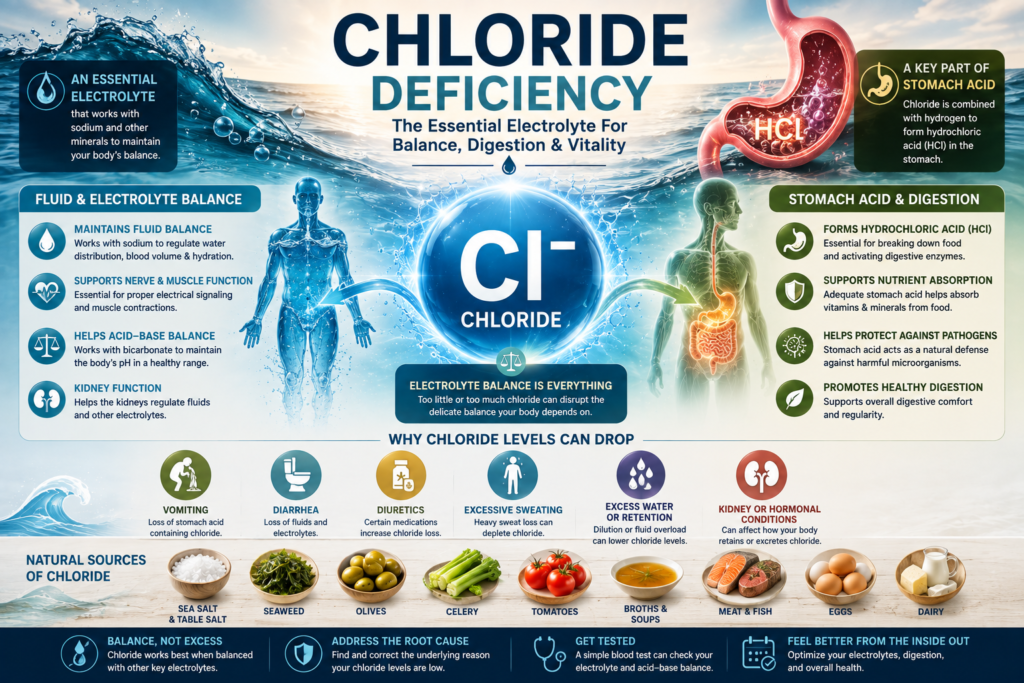
Yet chloride is one of the major electrolytes in the human body and is essential for fluid balance, acid-base regulation, digestion, nerve and muscle function, and normal cellular activity.
Chloride is also closely connected to sodium.
In fact, ordinary table salt is sodium chloride (NaCl), meaning every molecule contains both sodium and chloride.
When chloride concentration in the blood becomes abnormally low, the condition is known as hypochloremia.
But just like low sodium or potassium, low chloride doesn’t automatically mean:
“I need to eat more salt.”
The more important question is:
“Why is my body losing chloride or failing to maintain the proper electrolyte balance?”
What Does Chloride Actually Do?
Chloride is a negatively charged electrolyte found primarily in the fluid outside your cells.
It works alongside sodium, potassium, bicarbonate, and other electrolytes to maintain the chemical and electrical environment your body needs to function.
1. Chloride Helps Maintain Fluid Balance
Your body contains a tremendous amount of water, but that water isn’t distributed randomly.
Water continuously moves between:
- Blood
- Cells
- Tissues
- Kidneys
- Digestive system
Electrolytes help regulate where that water goes.
Chloride works particularly closely with sodium to help maintain normal fluid distribution, blood volume, and osmotic balance.
This is why significant losses of bodily fluids can disturb multiple electrolytes simultaneously.
2. Chloride Is Needed To Produce Stomach Acid
One of chloride’s most interesting roles happens inside your stomach.
Your stomach produces hydrochloric acid (HCl).
The “Cl” in HCl is chloride.
Hydrochloric acid helps create the highly acidic environment needed for normal digestion.
Stomach acid contributes to:
- Breaking down food
- Digesting proteins
- Activating the enzyme pepsin
- Releasing certain nutrients from food
- Helping protect against some microorganisms entering through food
This means chloride isn’t simply an electrolyte circulating in your blood.
It’s also connected directly to digestive function.
However, digestive symptoms alone cannot tell you whether you’re chloride-deficient.
3. Chloride Helps Control Your Acid-Base Balance
Your blood must remain within a very narrow pH range.
Your lungs, kidneys, electrolytes, and buffering systems constantly work together to maintain this balance.
Chloride participates in these processes alongside bicarbonate.
When chloride becomes significantly depleted, the body’s acid-base balance can shift.
One important example is metabolic alkalosis, which can occur in situations involving substantial chloride loss.
This is one reason persistent vomiting can cause much more than simple dehydration.
You’re losing fluids, electrolytes, and stomach acid at the same time.
4. Chloride Works With Other Electrolytes
Chloride doesn’t function independently.
Think of your electrolyte system as a team:
Sodium helps regulate extracellular fluid and blood volume.
Potassium is especially important inside cells and for electrical activity.
Magnesium participates in hundreds of enzymatic processes and helps regulate other electrolytes.
Calcium contributes to muscle contraction, nerve signaling, and numerous cellular processes.
Chloride helps maintain fluid and acid-base balance and contributes to stomach acid.
An imbalance in one electrolyte can sometimes occur alongside abnormalities in several others.
What Can Low Chloride Feel Like?
Mild hypochloremia may cause no obvious symptoms.
When chloride becomes significantly abnormal, symptoms often overlap with the symptoms produced by the underlying condition or accompanying electrolyte disturbances.
Possible symptoms can include:
- Fatigue
- Weakness
- Muscle cramps
- Excessive thirst
- Dehydration
- Irritability
- Confusion
Significant electrolyte and acid-base disturbances can cause more serious symptoms.
However, these symptoms are extremely nonspecific.
You cannot diagnose chloride deficiency based on symptoms alone.
A blood test is needed to determine whether chloride is actually low.
Why Does Chloride Become Low?
Dietary chloride deficiency by itself is relatively uncommon because chloride is widely available in food, particularly as sodium chloride.
Low blood chloride is more commonly associated with fluid loss, medications, excessive water retention, or disturbances in acid-base balance.
Let’s look at some of the major causes.
1. Prolonged Vomiting
Vomiting is one of the classic ways the body can lose chloride.
Remember:
Your stomach contains hydrochloric acid.
Repeated vomiting means you’re losing stomach contents containing both hydrogen and chloride.
Significant or prolonged vomiting can therefore contribute to:
- Chloride depletion
- Dehydration
- Potassium abnormalities
- Sodium abnormalities
- Metabolic alkalosis
This is why severe vomiting isn’t simply about losing water.
You’re losing an entire mixture of fluids and electrolytes.
2. Diarrhea & Gastrointestinal Losses
Persistent diarrhea can also result in substantial fluid and electrolyte losses.
Depending on the type and severity of gastrointestinal loss, abnormalities can involve:
- Chloride
- Sodium
- Potassium
- Bicarbonate
- Water
When fluid losses are significant, replacing only plain water may not always restore the body’s electrolyte balance appropriately.
3. Certain Diuretics
Some medications increase the amount of salt and water eliminated through the kidneys.
Certain diuretics can therefore contribute to chloride depletion along with abnormalities in sodium and potassium.
People taking these medications may sometimes require periodic electrolyte monitoring.
This doesn’t mean the medication should simply be stopped.
Medication changes should be made with the prescribing healthcare professional.
4. Excessive Sweating
Sweat contains both sodium and chloride.
During prolonged intense exercise, heavy physical labor, or extended exposure to hot environments, substantial amounts of these electrolytes can be lost.
Under ordinary conditions, the body can generally compensate.
But prolonged heavy sweating combined with inadequate electrolyte replacement can potentially disturb fluid and electrolyte balance.
5. Excessive Fluid Intake Or Water Retention
Sometimes an electrolyte concentration becomes low not because enormous amounts of the electrolyte were lost, but because there is too much water relative to it.
This is called dilution.
Certain medical conditions and hormonal disturbances can cause the body to retain excessive amounts of water.
As a result, chloride and other electrolyte concentrations may appear low.
This is another reason why simply consuming more chloride isn’t always the correct solution.
6. Kidney & Hormonal Problems
Your kidneys constantly decide how much:
- Water
- Sodium
- Chloride
- Potassium
- Other electrolytes
should remain in your body or leave through urine.
Hormones help regulate this process.
Conditions affecting kidney function or hormonal regulation can therefore disturb chloride balance.
When chloride remains persistently abnormal without an obvious explanation, the underlying cause deserves investigation.
Are You Getting Enough Chloride From Food?
Most people don’t need to search for specialized “chloride foods.”
Chloride is commonly consumed together with sodium as salt (sodium chloride).
Dietary sources can include:
- Table salt
- Sea salt
- Cheese
- Olives
- Tomatoes
- Seaweed
- Celery
- Meat
- Fish
- Eggs
- Fermented foods
- Soups and broths
Many packaged foods also contain substantial amounts of sodium chloride.
For this reason, inadequate dietary chloride intake is uncommon for many people eating a typical modern diet.
Chloride & Stomach Acid: An Important Connection
Because chloride is part of hydrochloric acid, people sometimes assume that low stomach acid automatically means chloride deficiency.
That’s too simplistic.
Stomach acid production depends on much more than simply consuming chloride.
It involves:
- Specialized stomach cells
- Hormonal signals
- Nerve signals
- Chloride transport
- Hydrogen production
- Overall gastric function
Low stomach acid can have several possible causes and shouldn’t automatically be treated by simply consuming more salt.
The important principle remains the same:
Understand the mechanism before choosing the treatment.
How Do You Correct Low Chloride?
There is no single treatment that applies to every case.
The appropriate approach depends on why the chloride became low.
For someone who has lost significant fluids and electrolytes through vomiting, diarrhea, or prolonged sweating, treatment may involve replacing both fluids and electrolytes.
If a medication is causing the problem, the medication or dosage may need to be reviewed by a healthcare professional.
If the underlying issue involves kidney function, hormones, excessive fluid retention, or an acid-base disturbance, correcting that condition becomes the priority.
Simply adding more salt doesn’t address all of these situations.
Electrolyte Replacement: Think Balance, Not Just Salt
Chloride is rarely the only electrolyte affected when substantial fluid loss occurs.
That’s why properly formulated oral rehydration solutions contain a specific balance of ingredients rather than simply enormous amounts of one mineral.
Depending on the cause of the losses, the body may need appropriate amounts of:
- Water
- Sodium
- Chloride
- Potassium
- Glucose
The goal isn’t to maximize electrolytes.
It’s to restore the appropriate fluid and electrolyte balance.
How Do You Test Chloride?
We use energetic testing. Book an appointment with us below, and we will be able to tell you all about your deficiencies, not only chloride.
Chloride is usually not the problem; it’s more magnesium, potassium, or sodium, the big three.
When Is Low Chloride Serious?
A mildly abnormal laboratory value isn’t necessarily an emergency.
But significant electrolyte disturbances can become dangerous, particularly when associated with severe dehydration, kidney problems, major vomiting or diarrhea, or substantial acid-base abnormalities.
Seek prompt medical attention for symptoms such as:
- Severe weakness
- Significant confusion
- Fainting
- Persistent vomiting
- Severe dehydration
- Abnormal heart rhythm
- Seizures
- Major changes in consciousness
These symptoms shouldn’t be self-treated by simply consuming additional salt.
The Bigger Picture: Chloride Is About Balance
Chloride deficiency demonstrates an important principle about nutrition.
A low nutrient or electrolyte doesn’t always mean:
“You didn’t consume enough.”
Sometimes you’re losing too much.
Sometimes your kidneys are excreting too much.
Sometimes medication can change your electrolyte balance.
Sometimes you’re retaining excessive water.
Sometimes another medical condition is responsible.
And sometimes several electrolytes become abnormal together.
Instead of simply asking: “How do I increase chloride?”
Ask: “Why is my chloride low?”
At Systemic Body, we focus on understanding the nutritional and systemic factors contributing to an imbalance rather than simply matching every abnormality with another supplement.
The goal is to identify what is disrupting the body’s balance and address the underlying cause whenever possible.
Healthfully,
Systemic Body
Note: I write every post; all this info comes from 10 years of daily testing for my own body.