What’s Stomach Pain?
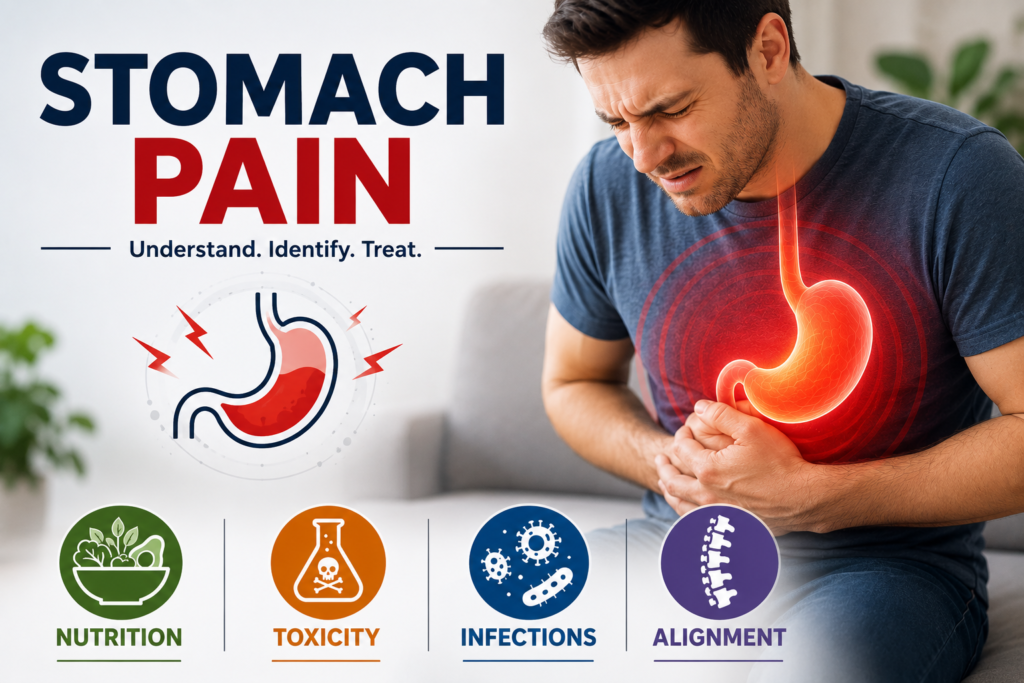
Stomach pain (or abdominal pain) is a broad term describing discomfort, aching, or pain felt anywhere in the region between your chest and groin.
While often referred to as a “stomach ache,” the pain can originate from the stomach itself or any of the surrounding organs within the abdominal cavity—including the intestines, gallbladder, liver, pancreas, kidneys, or appendix.
How Stomach Pain Is Identified
Medical professionals categorize abdominal pain by its quality, location, and pattern to pinpoint the underlying cause:
1. By Type & Sensation
- Dull, Aching Pain: Often related to generalized inflammation, gas build-up, or organ stretching.
- Cramping or Spasmodic: Typically comes and goes in waves; common in digestive motility issues, gas, diarrhea, or menstrual cycles.
- Sharp, Colicky Pain: Severe, localized pain that starts and stops suddenly; often associated with gallstones or kidney stones.
- Burning Sensation: Frequently associated with stomach acid irritation, such as acid reflux (GERD) or gastritis/ulcers.
2. By Region & Location
- Upper Abdomen: Often linked to the stomach, gallbladder, liver, or upper small intestine (e.g., acid reflux, gallstones, indigestion).
- Lower Abdomen: Frequently tied to the bowel, bladder, or reproductive organs (e.g., constipation, IBS, urinary tract issues, menstrual cramps).
- Localized to One Side: Can point to specific organ issues, such as appendicitis (lower right quadrant) or diverticulitis (lower left quadrant).
What Are The Root Causes?
Overwhelmed Liver
When we treat our patients with stomach pain, the number 1 thing causing problems is actually the liver, and not the stomach, as people think. The liver is the biggest organ inside the body, responsible for so many functions that you can’t live without it.
It plays a primary role in processing nutrients, hormones, fats, and waste. An overloaded liver can trigger systemic downstream effects, particularly in digestion.
Key Functions That Get Strained
- Bile Production & Flow (Cholestasis/Sluggish Bile):
- The liver produces bile to digest fats and excrete metabolic waste. When overloaded, bile can become thick or sluggish.
- Digestive Impact: Poor bile flow leads to incomplete fat digestion, floating or pale stools, poor absorption of fat-soluble vitamins (A, D, E, K), and significant upper-abdominal bloating or nausea after greasy meals.
- Hormone Metabolism (Estrogen Dominance):
- The liver is responsible for breaking down and deactivating circulating hormones, especially estrogen.
- Systemic Impact: If phase I/II liver clearance pathways are sluggish, excess estrogen can recirculate, contributing to fluid retention, PMS, cyclic bloating, and mood changes.
- Bilirubin & Waste Handling:
- An overload of cellular waste or toxins slows phase II conjugation pathways (like glucuronidation, sulfation, and glutathione conjugation).
- Systemic Impact: Unprocessed metabolites circulate longer, often manifesting as unexplained fatigue, skin issues (acne, eczema, itching), and brain fog.
Nutrient Deficiencies
The 2nd root cause would be nutrient deficiencies. I say 2nd here, but it’s actually the primary cause of liver dysfunction.
Phase II detoxification pathways rely heavily on specific nutrients—including B vitamins, amino acids (glycine, taurine, glutamine), zinc, selenium, and sulfur compounds. Deficiencies in these restrict liver capacity.
There’s a total of 21 vitamins & minerals that the body utilizes every day as fuel to function properly. You can see the full list in our article here:
So, if you have nutrient deficiencies, that can cause stomach pain because it impacts all natural functions of your body, such as your organs, your circulation, etc.
For example, if you have a magnesium deficiency, and magnesium is required for every cell of your body, you will start to have discrepancies, like stomach pain.
How To know If You Have Any Deficiencies?
As you probably know, the most common method is to do a blood test. However, the body is much more complex than that. Blood tests ARE NOT RELIABLE because they only measure the vitamins & minerals IN THE BLOOD within that TIMEFRAME. YOUR LEVELS ARE CHANGING EVERY SECOND, EVERY MINUTE, depending on what your body is trying to achieve.
Your whole body is utilizing vitamins & minerals, and not just in the blood. So we use energetic testing to assess any deficiencies that you may have.
Toxicity Overload
Too much toxicity in your body is another root cause of stomach pain. This is directly linked with nutrient deficiencies or organ problems like the liver. Toxicity in your body can only appear from nutrient deficiencies or alignment issues, restricting the natural circulation of the body.
Too much toxicity can overwhelm the liver, kidneys, gallbladder, etc., or interfere with digestion if your gut bacteria are feeding on toxic waste.
Everyone has a toxic load from exposure to chemicals, microplastics, metals, mold, EMF like 5G towers or from your phone, and artificial lights.
Getting rid of toxicity is a COMPLEX task and takes a long time. When your body has all the nutrients it needs, it will start detoxifying gradually.
Alignment Issues
Although less common, a physical misalignment from head to toes can be an isolated root cause for stomach pain.
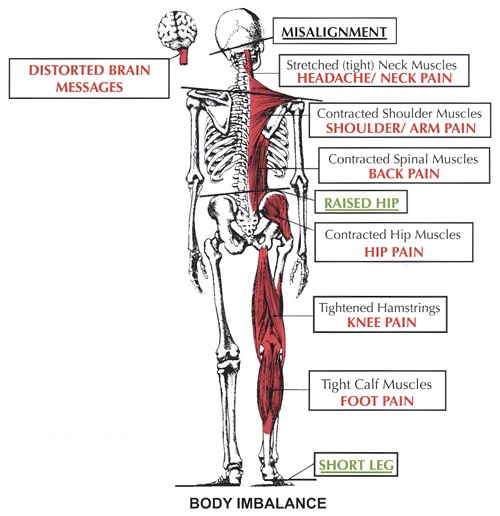
A proper alignment is SUPER important for EVERYTHING, like circulation, healing, avoiding injuries, etc. It’s the foundation for the whole body.
For example, a simple cranial distortion of 1mm can cause the whole body to distort, causing all kinds of body pain and issues: neck pain, traps, shoulders, back, hips, knees, ankles, insomnia, constant stress, weak organs, digestive issues like stomach pain, etc.
We will evaluate you and see if you have any misalignment issues. If you do, we will refer you to a good osteopath for the body and/or an orthodontist for the skull.
There are only a handful of them in the entire world. Average chiropractors and physiotherapists are often useless because they do not address the root cause of any misalignment.
Other Secondary Causes
Here is a detailed breakdown of each common category of abdominal pain causes, outlining what happens in the body and how these conditions typically manifest:
1. Digestive & Functional Causes
These conditions stem from temporary disruptions or functional sensitivity in how the gastrointestinal tract breaks down food, moves waste, or processes signals, without showing structural or anatomical damage on standard tests.
- Indigestion & Gas: Occurs when swallowed air or bacterial fermentation produces excess gas, leading to localized pressure, fullness, and mild, shifting abdominal pain.
- Constipation: Caused by slow intestinal motility or inadequate bulk/water in the stool. As stool accumulates, it distends the colon walls, causing dull, persistent aching or sharp lower abdominal cramps.
- Food Intolerances: Arise when the body lacks specific enzymes (e.g., lactase) to break down certain carbohydrates, causing unabsorbed food to ferment in the intestines, generating rapid gas, cramping, and urgent loose stools.
- Irritable Bowel Syndrome (IBS): A functional gut-brain disorder characterized by hypersensitive nerves in the gut wall and altered motility. Pain is often crampy, fluctuates with bowel movements, and alternates between constipation and diarrhea.
2. Inflammatory & Structural Causes
These involve physical erosion, tissue swelling, or structural damage to the lining of the digestive tract or surrounding structural tissue.
- Gastritis & Peptic Ulcers: Gastritis is the inflammation of the stomach lining, while ulcers are open sores in the stomach or upper small intestine. They cause a distinct gnawing, burning, or raw pain in the upper abdomen, often aggravated or temporarily relieved by food.
- Acid Reflux / GERD: Stomach acid leaks upward into the esophagus, inflaming its mucosal lining and producing a burning chest/upper abdominal pain (heartburn).
- Inflammatory Bowel Disease (IBD): Autoimmune conditions like Crohn’s disease and Ulcerative Colitis cause chronic, destructive inflammation along the digestive tract. Symptoms include persistent deep abdominal pain, severe cramping, bloody stools, and unintended weight loss.
- Diverticulitis: Small pouches (diverticula) that develop in the wall of the colon become infected or inflamed, typically causing sharp, localized pain in the lower left abdomen along with fever and altered bowel habits.
3. Organ-Specific Acute Causes
These represent sudden, high-intensity conditions affecting specific abdominal organs (gallbladder, pancreas, appendix, kidneys). They often require immediate medical evaluation or intervention.
- Appendicitis: Inflammation and infection of the appendix. It typically begins as a dull ache around the belly button before shifting to a sharp, intense, constant pain in the lower right abdomen, exacerbated by movement or touch.
- Gallbladder Disease (Cholecystitis/Gallstones): Occurs when bile hardens into stones or blocks the bile duct, inflaming the gallbladder. It manifests as sudden, severe, sharp, or squeezing pain in the upper right abdomen, often radiating to the right shoulder or back after high-fat meals.
- Pancreatitis: Inflammation of the pancreas, frequently triggered by gallstones or heavy alcohol use. It produces a severe, constant, boring pain in the upper abdomen that often radiates straight through to the back and worsens when lying down flat.
- Kidney Stones: Hardened mineral deposits moving through the urinary tract. Pain is sudden, excruciating, and sharp, originating in the flank/back (below the ribs) and radiating down toward the lower abdomen and groin in waves.
4. Systemic & Related Causes
These causes originate outside the digestive organs themselves or involve systemic connections like the central nervous system, immunity, or surrounding muscle tissues.
- Stress & Nervous System Activation (Gut-Brain Axis): Psychological stress triggers the sympathetic “fight-or-flight” response, reducing blood flow to the digestive system, slowing motility, and heightening pain perception, resulting in functional “butterflies,” severe cramping, or nausea.
- Gastroenteritis (“Stomach Flu”) & Food Poisoning: Viral, bacterial, or parasitic infections trigger rapid inflammation and irritation of the stomach and intestinal mucosa. This leads to generalized, intense abdominal cramping, hyperactive gut gurgling, vomiting, and watery diarrhea.
- Abdominal Wall / Muscular Strain: Strain or injury to the abdominal muscles (rectus abdominis, obliques) causes localized pain that directly worsens with physical movement, coughing, or flexing the core, but is unrelated to food intake or digestion.
Conclusion – Get Help NOW
We successfully treated a lot of people with stomach pain.
On average, people start to feel better after 2-3 weeks, but it could take more time to fully recover, depending on how severe your case is.
Everyone is different. Book your spot now if you want to end your stomach pain!
The more you wait, the worse it’s going to get.
Healthfully,
Systemic Body
Note: I write every post; all this info comes from 10 years of daily testing for my own body.