
What’s A Headache?
A headache is a common neurological condition characterized by pain or discomfort felt anywhere in the head, upper neck, or face.
The pain originates from the activation of pain-sensitive structures within and around the head—such as blood vessels, nerve networks, skin, and muscles—rather than the brain tissue itself (which lacks pain receptors).
A headache is a common neurological condition characterized by pain or discomfort felt anywhere in the head, upper neck, or face.
The pain originates from the activation of pain-sensitive structures within and around the head—such as blood vessels, nerve networks, skin, and muscles—rather than the brain tissue itself (which lacks pain receptors).
1. Classification & Types
Headaches are broadly categorized into two main groups:
- Primary Headaches: Headaches that are an independent condition and not caused by an underlying medical issue.
- Examples: Tension headaches, migraines, and cluster headaches.
- Secondary Headaches: Headaches caused by an underlying structural, vascular, or systemic condition, where the headache is a symptom of another problem.
- Examples: Sinus infections, high blood pressure, dehydration, head injury, or medication overuse (“rebound” headaches).
2. Common Pain Characteristics
Depending on the underlying type, headache pain can vary significantly in intensity and quality:
- Dull & Aching: Often feels like a tight band wrapped around the forehead, temples, or back of the head (typical of tension headaches).
- Throbbing or Pulsating: Usually localized to one side of the head, often accompanied by sensitivity to light/sound or nausea (typical of migraines).
- Sharp, Piercing, or Burning: Intensely localized behind one eye or temple, frequently occurring in cyclical patterns (typical of cluster headaches).
How To Treat Headaches
In order to treat headaches, you need to understand the root causes of the condition. That’s VERY hard to identify, because there’s more than 1 root cause, and inside it, there are several sub-variation causes.
After almost 10 years of daily experiments, research, and helping people with these kinds of conditions, we were able to identify 6 main root causes for all health issues:

For headaches, it’s often a combination of nutritional issues, toxic overload, or structural issues.
Why Nutrition?
Magnesium
Magnesium plays a critical role in regulating your central nervous system, blood vessels, and neurotransmitters. When your body is low on magnesium, several physiological cascades are triggered that directly contribute to headaches—especially migraines and tension headaches:
1. Vasospasms (Blood Vessel Constriction)
Magnesium acts as a natural calcium channel blocker, helping smooth muscle tissue in blood vessels relax.
- Deficiency Effect: Without sufficient magnesium, calcium enters blood vessel cells unchecked, causing the blood vessels in the brain to constrict suddenly (vasospasm) and then dilate. This rapid fluctuation alters cerebral blood flow and triggers pain receptors in the vascular walls.
2. Excessive Glutamate Activation (Neuroexcitation)
Magnesium sits inside NMDA receptors in the brain like a plug, preventing them from over-firing.
- Deficiency Effect: When magnesium levels drop, the plug is removed, allowing the excitatory neurotransmitter glutamate to overstimulate nerve cells. This hyperexcitability can spark cortical spreading depression—a wave of neurological activity that sweeps across the brain, commonly responsible for migraine auras and intense head pain.
3. Increased Inflammatory Signaling (Substance P)
Magnesium helps regulate the release of inflammatory neuropeptides.
- Deficiency Effect: Low magnesium promotes the release of Substance P and other pro-inflammatory cytokines. Substance P sensitizes sensory nerve fibers (specifically the trigeminal nerve pathway) and increases pain perception, making the brain significantly more sensitive to pain signals.
4. Serotonin Imbalance & Platelet Aggregation
Serotonin controls blood vessel tone and mood regulation, while blood platelets play a key role in clotting and vascular signals.
- Deficiency Effect: Depleted magnesium impairs serotonin receptor function and causes blood platelets to clump together (aggregate). Aggregated platelets release serotonin and histamine into the bloodstream, further destabilizing brain blood vessels and triggering vascular headaches.
5. Chronic Muscle Tension & Spasms
Because magnesium is required for muscle fibers to relax after contracting, a lack of it leads to persistent muscular contraction.
- Deficiency Effect: Tightness in the muscles of the neck, shoulders, upper back, and suboccipital region (base of the skull) puts physical traction on cranial nerves, directly triggering tension headaches or referring pain up into the head.
Potassium
Potassium works in synergy with magnesium, along with sodium.
1. Disruption of Resting Membrane Potentials & Nerve Signalling
Potassium is essential for setting the electrical charge across nerve cell membranes. When potassium levels drop, neurons become hyper-irritable and unstable, sending irregular electrical spikes through nerve pathways like the trigeminal system, which directly conveys pain signals from the head and face.
2. Impaired Blood Pressure & Cerebral Autoregulation
Potassium helps maintain healthy vascular tone by relaxing the smooth muscles surrounding blood vessels. A lack of potassium causes blood vessels to narrow and increases systemic blood pressure, leading to vascular tension and throbbing headaches due to altered blood flow dynamics in the brain.
3. Muscle Tension & Spasms at the Base of the Skull
Because potassium works with sodium to contract and relax muscles, low levels prevent muscle fibers from fully relaxing. Persistent spasms or tight knots in the neck, traps, and suboccipital muscles (at the base of the skull) pull on surrounding tissue and compress nerves, triggering tension headaches.
4. Cellular Dehydration & Osmotic Imbalance
Potassium is the primary electrolyte that holds water inside your cells. When potassium is deficient, cellular hydration breaks down, disrupting fluid balance across brain cells and surrounding membranes (meninges), which can cause the dull, aching pain typical of dehydration headaches.
Sodium
Here is how a sodium imbalance (either low sodium/hyponatremia or high sodium/hypernatremia) can contribute to headaches:
1. Fluid Shifts & Brain Cell Swelling (Hyponatremia)
Sodium is the main driver of fluid balance outside your cells. When blood sodium levels drop too low, water moves out of the bloodstream and rushes into brain cells through osmosis to equalize concentration. Because the skull cannot expand, this cellular swelling increases pressure inside the head, stretching pain-sensitive brain membranes (meninges) and triggering dull, diffuse headaches.
2. Intracranial Dehydration & Shrinkage (Hypernatremia)
Conversely, when blood sodium levels are excessively high (often from severe dehydration), fluid is drawn out of brain cells and into the bloodstream. This shrinkage puts physical traction on the blood vessels and meningeal tissues surrounding the brain, causing sharp, throbbing, or persistent dehydration headaches.
3. Altered Action Potentials & Nerve Signalling
Sodium ions moving rapidly into nerve cells are responsible for generating the electrical action potentials that transmit nerve signals. An imbalance in extracellular sodium disrupts normal nerve firing thresholds, leading to hyper-excitable pathways in the central nervous system that can lower the brain’s pain threshold and trigger neurological head pain.
4. Vascular Tone & Blood Pressure Fluctuations
Sodium plays a direct role in regulating blood volume and arterial contraction. Rapid shifts in sodium levels cause blood vessels to constrict or dilate abnormally, disrupting steady cerebral blood flow and altering vascular pressure within the skull, which often manifests as a pounding or throbbing headache.
Magnesium, sodium and potassium are the main mineral deficiencies causing headaches. There’s also sulfur, selenium and iodine, but that’s more rare, so we’re not going to include them here.
Toxicity Issues
The 2nd root cause can actually be a toxicity issue, like an overloaded liver, which has nothing to do with your head. The whole body is connected, and every system interacts with the others. So, how can an overwhelmed liver cause headaches? That’s a trillion-dollar question right there!
While the liver and the head are on opposite ends of the upper body, they are deeply connected through three primary pathways: blood circulation, nervous system signalling, and metabolic/biochemical pathways.
When liver function is altered, it directly impacts head and brain function—and vice versa.
1. The Circulatory Highway (Blood Flow)
- The Hepatic-Systemic Circuit: Blood flows from the heart through the systemic arteries to oxygenate the liver, and blood leaving the liver travels through the inferior vena cava straight back to the heart, which pumps it directly up through the carotid and vertebral arteries into the head.
- Toxin Filtration & Brain Barrier: One of the liver’s primary jobs is filtering toxins, metabolic waste, and heavy metals from the blood. If the liver is overloaded or sluggish, circulating compounds cross the blood-brain barrier, which can trigger central inflammation, fog, or vascular head pressure.
2. The Nervous System (The Gut-Liver-Brain Axis)
- The Vagus Nerve: The vagus nerve (Cranial Nerve X) acts as a direct, bi-directional “telephone wire” between the brainstem and the liver. It carries signals from the liver to the brain regarding nutrient status, inflammation, and energy levels, while the brain uses it to send signals back down to control liver enzyme production and bile secretion.
- Sympathetic Signals: The thoracic sympathetic nerves connect the liver to the spinal cord and up to the brain’s autonomic control centers, regulating blood flow and glycogen release during stress.
3. Metabolic & Biochemical Signalling
- Glucose Supply: The brain consumes about 20% of the body’s energy and relies almost entirely on glucose. The liver regulates blood sugar through glycogen storage and gluconeogenesis (creating glucose). When liver glycogen drops, the brain senses the energy deficit, which can manifest as brain fog, dizziness, or tension headaches.
- Ammonia & Neurotransmitters: The liver processes nitrogenous waste into urea. If liver detox pathways are impaired, rising ammonia levels in the blood pass into the brain, disrupting neurotransmitters (like glutamate and GABA) and altering brain signalling.
- Bile & Histamine Metabolism: The liver breaks down excess circulating hormones (like estrogen) and histamines. Poor liver clearance can lead to elevated systemic histamine or hormonal imbalances, both of which are common triggers for vascular headaches and migraines.
4. Fascial & Structural Connections
- The Diaphragm & Neck/Shoulder Pathways: The liver is attached directly to the underside of the diaphragm by the falciform and coronary ligaments. Tension or congestion in the liver can create physical drag on the diaphragm. The diaphragm is innervated by the phrenic nerve (originating from cervical spinal roots C3–C5 in the neck), which can cause referred tightness up into the shoulders, neck, and base of the skull.
Other Toxicity Issues
A toxic liver is the main one, as the liver is the biggest internal organ in the body, if we don’t count the skin. However, you could have other issues outside of the liver, like the kidneys, brain, blood circulation, etc., causing you headaches. We will evaluate you carefully and let you know our findings.
Alignment Issues
The last root cause of headaches could be something completely different than nutrition and toxicity. It could be a structural problem (alignment issue) at any body level, like cranial bones, jaw joints, upper cervicals, pelvic floor, etc.
If you’ve had headaches for a long time, it could indeed be an alignment issue caused either by an accident, sports injury, or orthodontic work where they change the position of the cranial bones with braces (retraction orthodontics with tooth extractions).
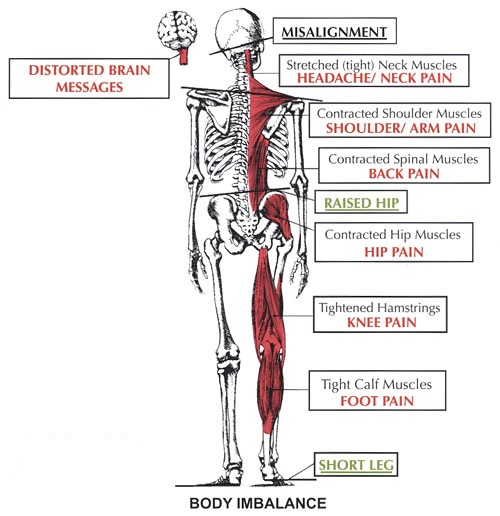
If that’s one of your root causes, we will refer you to a good osteopath or orthodontist who understands the cranial complex, not just the teeth, like the average orthodontist.
There are only a handful of them in the entire world. Fixing an alignment issue can be VERY complex; that’s why the average chiropractor or physiotherapist in your neighborhood ends up not fixing anything.
Conclusion – Take Action NOW
Success with headaches requires focusing on the right things: The 3 root causes that make a difference rather than the many symptoms.
Sometimes, more than one root cause has to be addressed to make a difference. Solutions should be customized to the individual and specified and quantified in as much detail as possible.
We successfully treated a lot of people with headaches. On average, people start to feel better after 2-3 weeks. Book your spot now if you want to END your headaches. We are the ONLY ONES providing a real cure for this condition.
Healthfully,
Systemic Body
Note: I write every post, the CEO of Systemic Body, nothing is AI, obviously.
All these infos comes from 10 years of daily testing for my own body. I also had headaches.