The True Definition
Vitamin C deficiency is a state in which the body has inadequate tissue levels of vitamin C (ascorbic acid)—an essential water-soluble antioxidant required for collagen synthesis, immune function, tissue repair, and neurotransmitter production.
Because the human body cannot produce or store vitamin C, a prolonged lack of dietary intake leads to depleted body stores and impairs the structural integrity of connective tissues throughout the body.
Severe Clinical Form: Scurvy
When vitamin C deficiency becomes severe and prolonged (typically after 1 to 3 months of little to no intake), it manifests as scurvy. Scurvy disrupts collagen stabilization, leading to blood vessel fragility and connective tissue breakdown.
- Early Symptoms: Fatigue, lethargy, malaise, and muscle aches.
- Progressive Manifestations:
- Dermatologic: Follicular hyperkeratosis, corkscrew hairs, petechiae (small pinpoint bleeding under the skin), and easy bruising (ecchymosis).
- Oral: Swollen, spongy, bleeding gums, and loosening or loss of teeth.
- Musculoskeletal & Vascular: Joint pain (arthralgia), poor wound healing, reopened old scars, and spontaneous internal bleeding.
What Can Cause Vitamin C Deficiency?
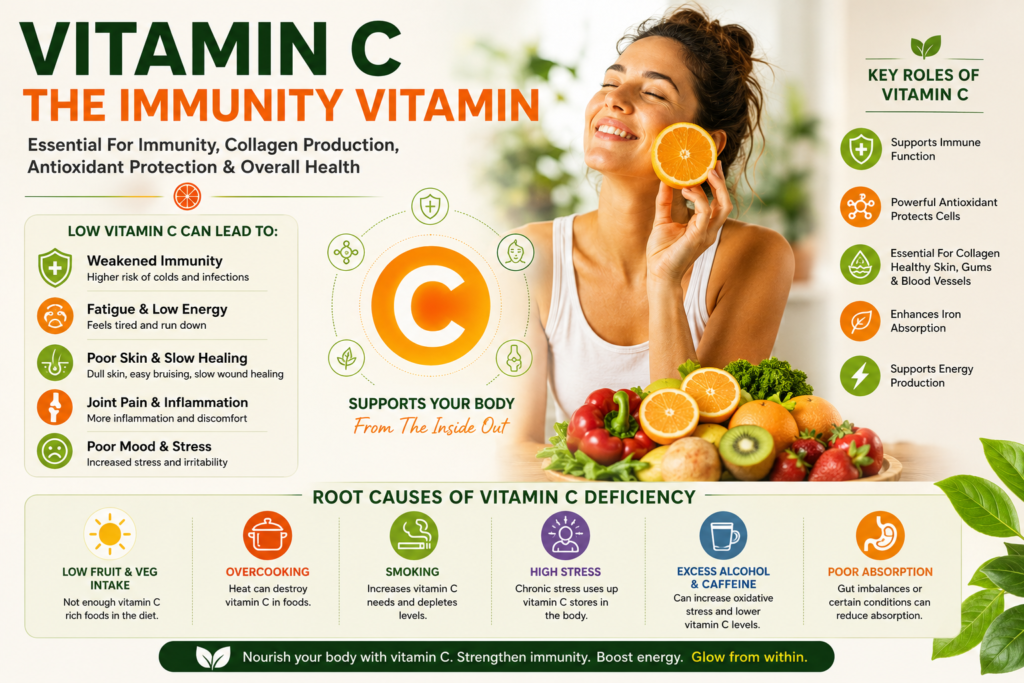
The primary root causes include the following, and we indeed saw many patients with a vitamin C deficiency:
1. Inadequate Dietary Intake
Since humans lack the specific enzyme (L-gulonolactone oxidase) required to synthesize vitamin C internally, total reliance is placed on diet.
- Lack of Fresh Produce: Diets are poor in fresh fruits and vegetables (e.g., citrus fruits, berries, bell peppers, tomatoes, broccoli, and leafy greens).
- Restrictive or Highly Processed Diets: Diets high in processed foods or strict, limited food regimens that exclude fresh plant foods.
- Food Preparation Techniques: Overcooking or boiling foods for extended periods destroys vitamin C, as it is highly heat- and water-sensitive.
2. Malabsorption & Gastrointestinal Conditions
Even with adequate dietary intake, underlying digestive issues can prevent proper absorption in the small intestine:
- Inflammatory Bowel Disease (IBD): Conditions like Crohn’s disease or Ulcerative Colitis.
- Celiac Disease: Unmanaged celiac disease damages the intestinal lining, impeding nutrient transport.
- Severe Gastrointestinal Surgeries: Gastric bypass or extensive bowel resections reduce the surface area available for absorption.
3. Increased Metabolic Consumption & Stress
Certain medical conditions, behaviors, or physiological states accelerate the body’s consumption rate of vitamin C:
- Casping & Smoking: Tobacco smoke contains high levels of oxidants. Smokers require an estimated 35 mg/day more vitamin C than non-smokers to neutralize increased oxidative stress.
- Chronic Illness & Inflammation: Cancer, chronic kidney disease (especially patients on hemodialysis), and severe chronic infections deplete vitamin C rapidly.
- Pregnancy & Lactation: Increased physiological demands from fetal growth or milk production lower maternal circulating levels if intake is not adjusted.
- Substance Dependence: Severe alcohol use disorder is heavily associated with vitamin C deficiency due to a combination of poor nutritional intake, reduced intestinal absorption, and altered liver storage.
How To Treat Vitamin C Deficiency
We recommend eating more fruits, primarily because they are easy to digest, even easier than vegetables, and are often cheap at grocery stores. You can eat whatever is in season; fresh and local is always better.
Top Food Sources:
- Citrus fruits (oranges, lemons, grapefruits)
- Bell peppers (red and yellow peppers have higher concentrations than green)
- Berries (strawberries, blackcurrants)
- Kiwifruit
- Cruciferous vegetables (broccoli, Brussels sprouts)
- Tomatoes and leafy greens
Sometimes, you will also require ascorbic acid as a supplement for antioxidants. Ascorbic acid is highly effective in neutralizing die-off from detoxification. We will let you know if you need that when you book an appointment.
Conclusion – Get Started NOW
If you want to get treated for a vitamin C deficiency, book an appointment below, and we will tell you what your deficiencies are with energetic testing. Maybe you think you have that deficiency, but only our testing can tell you. It’s always better to test and not guess.
The less you wait, the better it will be to replenish your levels. If you really have a deficiency, it can start causing you a lot of problems, like fatigue, lethargy, malaise, and muscle aches.
Healthfully,
Systemic Body
Note: I write every post; all this info comes from 10 years of daily testing for my own body.