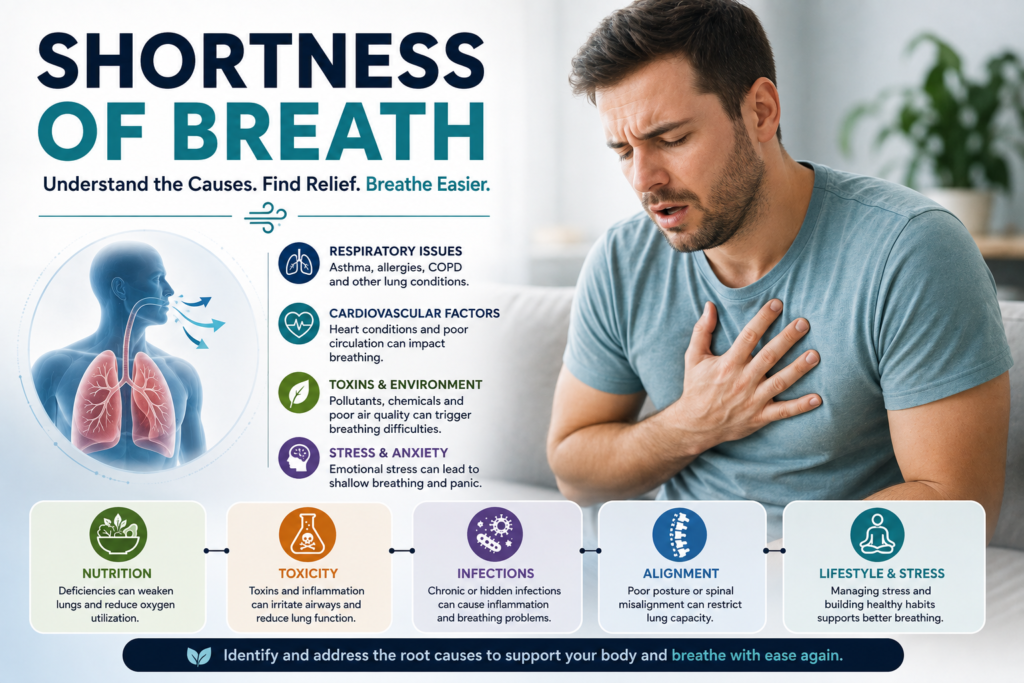
A Complete Definition
Shortness of breath, medically known as dyspnea, is the uncomfortable, subjective sensation of not being able to get enough air into the lungs.
It is frequently described by individuals as:
- “Air hunger” or gasping for air
- An intense tightening or pressure in the chest
- Feeling suffocated or unable to take a full, deep breath
- Labored breathing that requires unusual conscious effort
While it is a normal physiological response to strenuous exercise, extreme temperatures, or high altitudes, sudden or unexplained shortness of breath is typically a primary symptom of an underlying medical condition.
What Are The Root Causes?
According to our experiences, the most common causes are toxicity stuck near the lungs, due to nutrient deficiencies or alignment issues. I had the same issues when detoxing mercury and other toxic chemicals. I had feelings that I was missing oxygen, but I was actually missing antioxidants like selenium.
Once I took more selenium, the shortness of breath went away. It happened several times, and antioxidants solved the issue every time. Pine bark was also useful, another type of antioxidant.

These are the 6 main root causes mentioned on our homepage. Shortness of breath can be a combination of those. We will evaluate you carefully and see what’s going on in YOUR body.
Secondary Causes
These are secondary causes, caused by either nutrient deficiencies, toxicity, or alignment issues.
1. Cardiovascular System Causes
When the heart cannot pump blood efficiently, blood can back up into the pulmonary vessels or fail to deliver adequate oxygenated blood to tissues.
- Heart Failure: Weakened or stiff heart muscle leads to fluid buildup in the lungs (pulmonary edema), particularly when lying flat.
- Coronary Artery Disease & Heart Attack: Reduced blood flow to the heart muscle causes acute tightness, chest pain, and sudden dyspnea.
- Arrhythmias: Abnormally fast, slow, or irregular heartbeats disrupt efficient blood circulation.
- Valvular Heart Disease: Damaged heart valves restrict proper blood flow through the heart chambers.
2. Respiratory & Pulmonary Causes
Direct impairment of airway clearance, lung tissue elasticity, or gas exchange surfaces.
- Asthma & COPD: Chronic inflammation or narrowing of the airways leads to trapped air, bronchospasm, and difficult exhalation.
- Pulmonary Embolism: A blood clot traveling to the lungs blocks pulmonary arteries, disrupting gas exchange (a medical emergency).
- Pneumonia & Respiratory Infections: Fluid and inflammatory debris fill the alveoli (air sacs), hindering oxygen absorption.
- Interstitial Lung Disease / Pulmonary Fibrosis: Progressive scarring of lung tissue reduces overall lung compliance and gas exchange capacity.
- Pneumothorax: A collapsed lung caused by air escaping into the pleural cavity, compressing the lung tissue.
3. Hematologic & Metabolic Causes
Issues where the lungs and heart function normally, but blood composition or metabolic demands create an oxygen deficit.
- Anemia: A deficiency in healthy red blood cells or hemoglobin reduces the blood’s total oxygen-carrying capacity.
- Metabolic Acidosis (e.g., Diabetic Ketoacidosis): The body compensates for high blood acidity by rapidly hyperventilating to blow off excess carbon dioxide (Kussmaul breathing).
- Thyroid Dysfunction: Hyperthyroidism increases metabolic rate and oxygen consumption, while severe hypothyroidism can weaken respiratory muscles.
4. Neuromuscular & Structural Causes
Impairments in the chest wall, diaphragm, or nerve signals driving the breathing process.
- Neuromuscular Disorders: Conditions like ALS, myasthenia gravis, or Guillain-Barré syndrome weaken the diaphragm and intercostal muscles.
- Chest Wall Deformities: Conditions such as severe scoliosis or kyphosis mechanically restrict lung expansion.
- Obesity Hypoventilation: Excessive chest weight restricts diaphragmatic movement and increases the workload of breathing.
5. Psychological & Nervous System Causes
Altered breathing mechanics driven by central nervous system feedback rather than structural lung disease.
- Anxiety & Panic Attacks: Triggers hyperventilation (rapid, shallow breathing), altering blood carbon dioxide levels, and producing a paradoxically intense sensation of suffocating or “air hunger.”
- Deconditioning: Severe lack of physical conditioning reduces muscle efficiency, causing disproportionate breathlessness during minor exertion.
Conclusion – Get Started NOW
We successfully treated a lot of people with shortness of breath. On average, people start to feel better right away if it’s an antioxidant issue. If it’s something more complicated, it takes about 2-3 weeks.
The more you wait, the worse it’s going to get. Book your spot now if you want to solve the problem.
Healthfully,
Systemic Body
Note: I write every post, the CEO of Systemic Body, nothing is AI, obviously.
All these infos comes from 10 years of daily testing for my own body.